 CCMC
CCMC
Lanka Corner Junction Transformation
Redesigning a critical intersection for safety and seamless mobility
View TransformationOverview
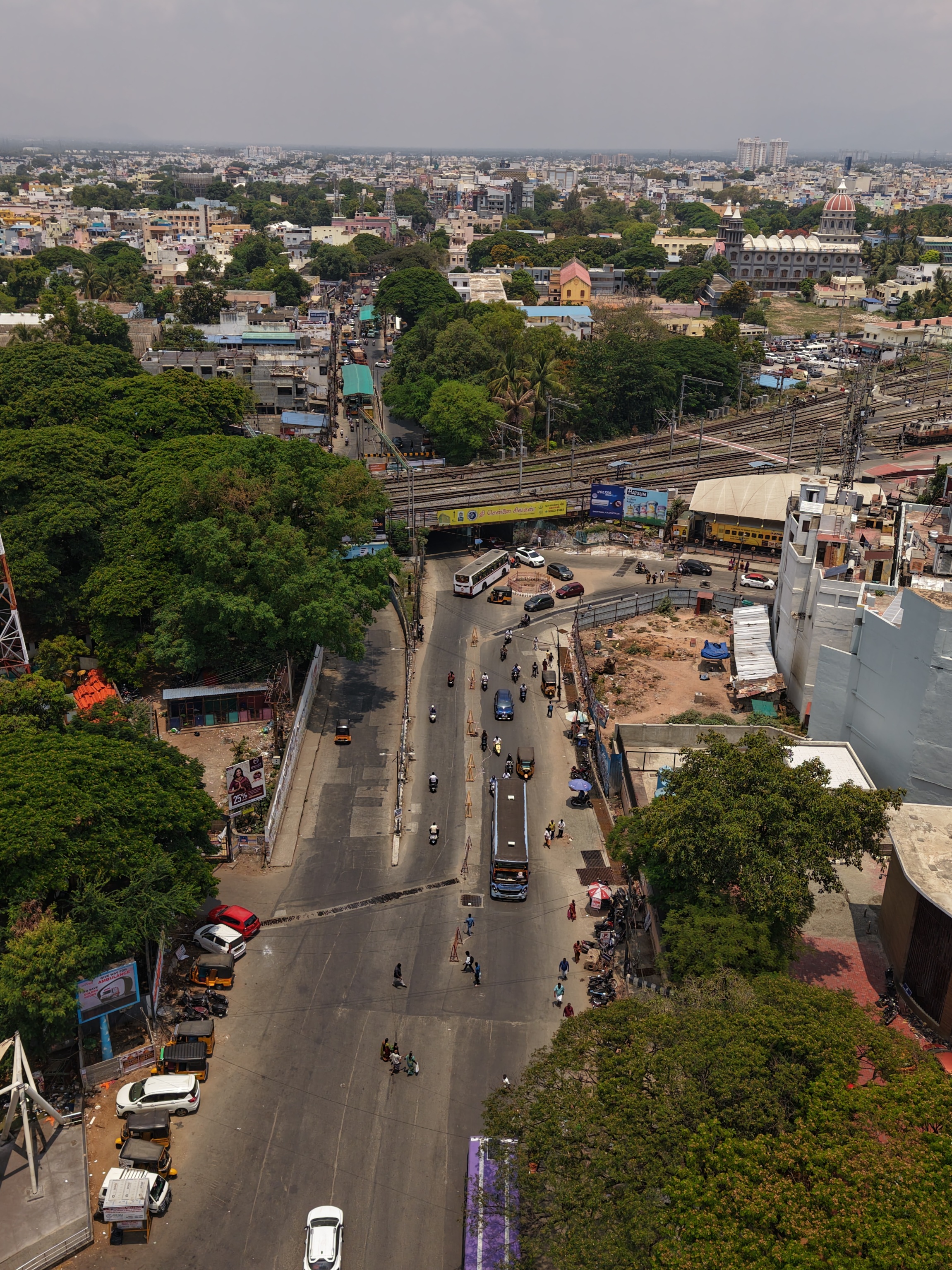
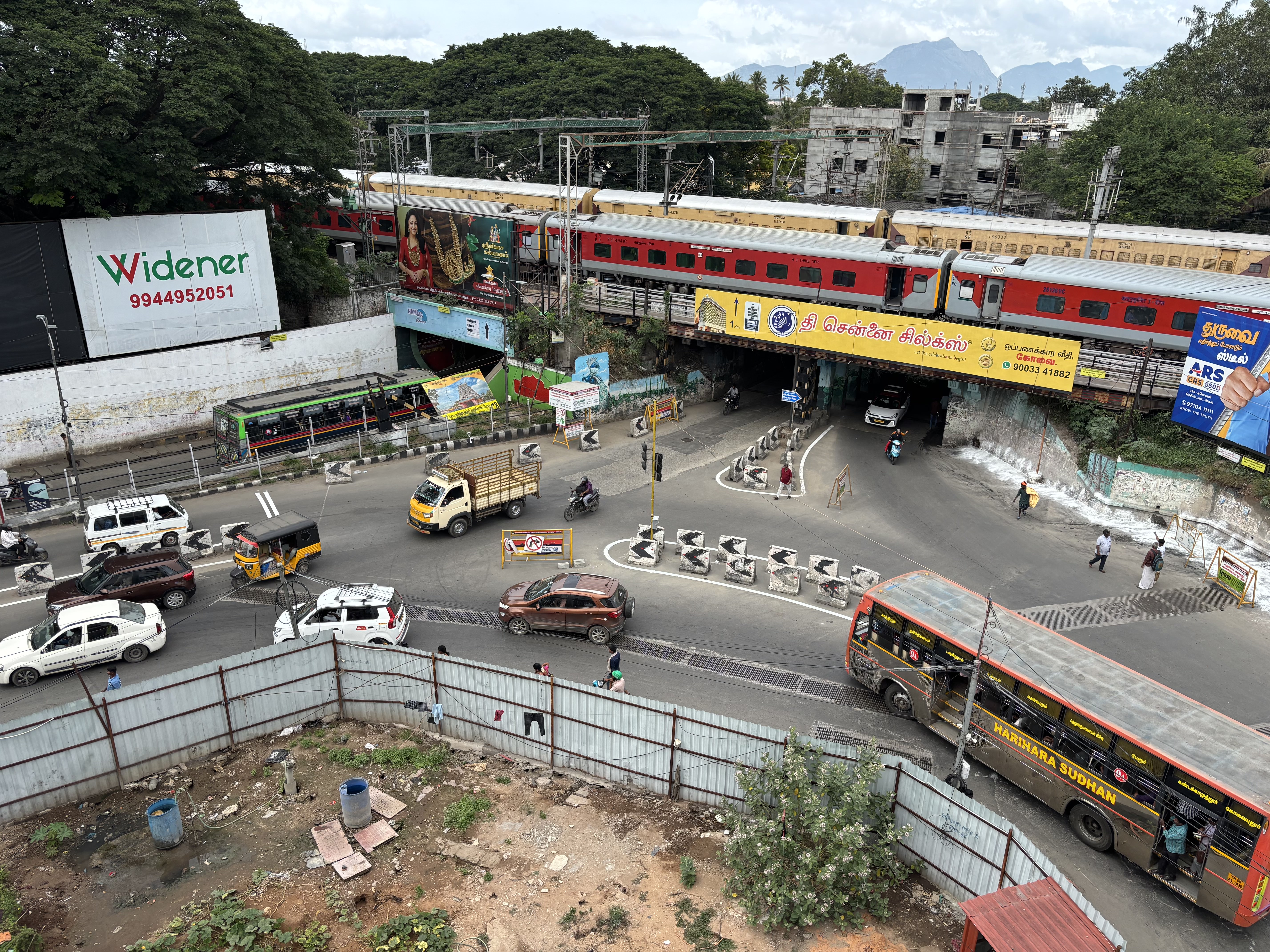
Lanka Corner Junction is one of Coimbatore's most critical intersections, positioned at the convergence of the Central Railway Station, GH Bus Stand, and Government Hospital. The junction carries exceptionally high traffic volumes, with nearly 30% of vehicles being buses—a rare composition in Indian cities—and over 1,000 pedestrians passing through every hour.
The combination of heavy bus movement, continuous pedestrian flow, uncontrolled traffic movement patterns and lack of adequate pedestrian infrastructure created unsafe conditions and frequent conflicts. To address these challenges, the redesign strategy emphasized safety, order, and accessibility, incorporating streamlined junction geometry, improved traffic circulation, designated safe pedestrian crossings, continuous footpaths, organized IPT and taxi stands, provision for emergency parking, improved turning movements to accommodate buses, traffic signals and enhanced signages. Collectively, these measures enhance safety, streamline circulation, and improve walkability and accessibility at this vital transit hub.
1. Site Context
Lanka Corner Junction is a high-intensity node linking Big Bazaar Road, Trichy Road, and State Bank Road. With direct access to the railway station, GH bus stand, and Government Hospital, it faces heavy traffic volumes and intense pedestrian movement throughout the day.
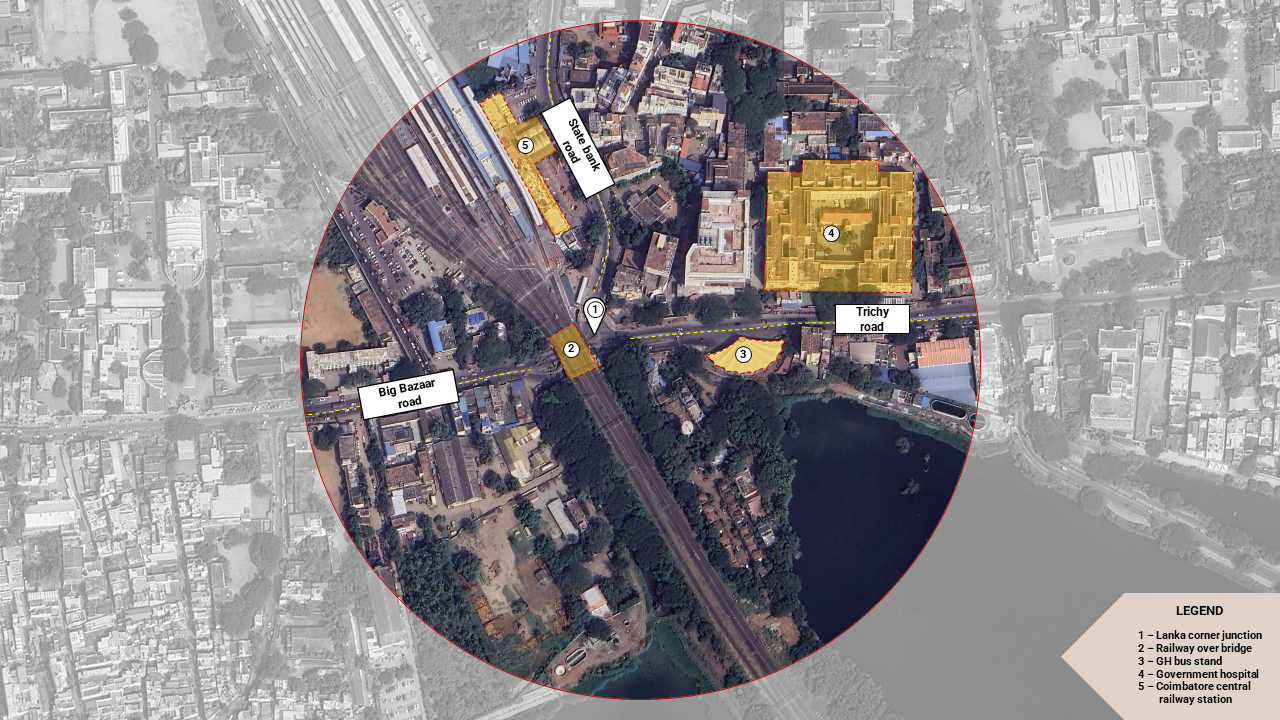
A vital mobility hub, Lanka Corner Junction provides direct access to Coimbatore Central Railway Station, Government Hospital, and the GH Bus Stand.
2. Issue Mapping
Detailed analysis revealed several critical issues at Lanka Corner Junction:
- Wide junction geometry creating multiple conflict points and unsafe turning movements
- Absence of safe pedestrian crossing facilities leading to frequent pedestrian–vehicle conflicts
- Inadequate and encroached pedestrian infrastructure pushing pedestrians onto carriageways
- Unregulated traffic flow with merging/diverging conflicts causing congestion
- Lack of appropriate lane marking, signage, and traffic control measures reducing road safety
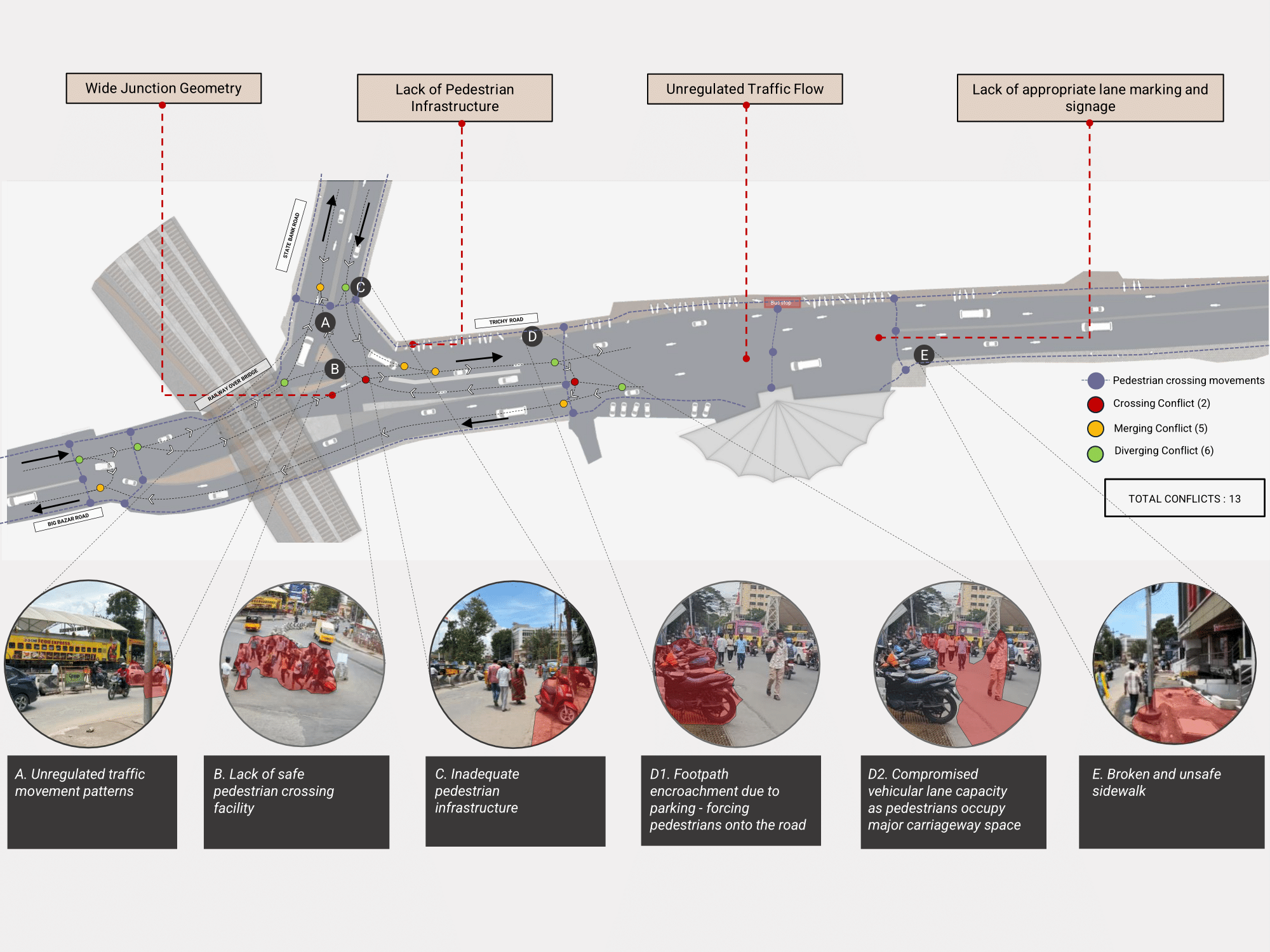
Comprehensive issue mapping revealed critical safety and efficiency challenges.
3. Traffic and Pedestrian Volume Studies
For Lanka Corner Junction, comprehensive traffic studies and pedestrian volume studies were conducted to understand traffic and pedestrian movement patterns and identify high-risk areas.
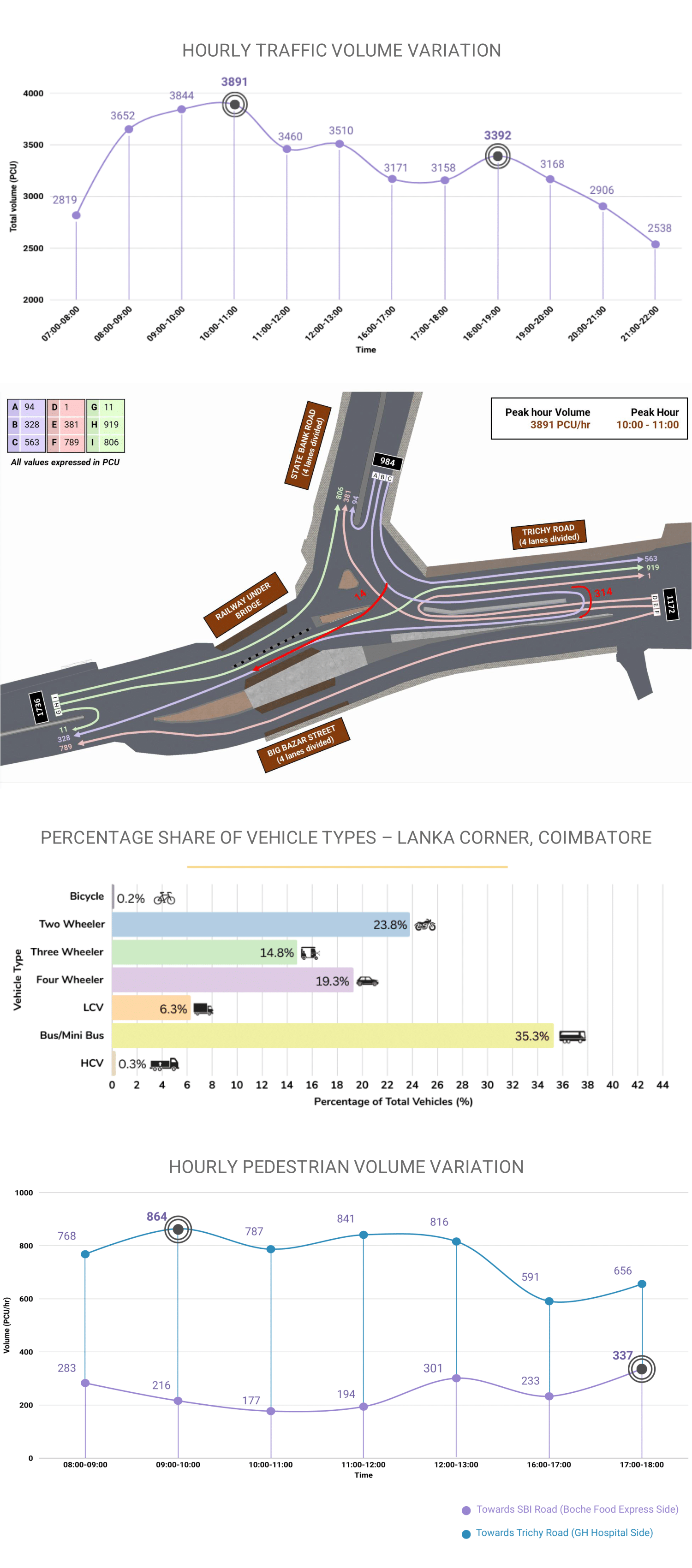
Detailed analysis of traffic and pedestrian volumes.
4. Design Approach - Key Design Elements
The redesign incorporated several key elements to address the identified issues:
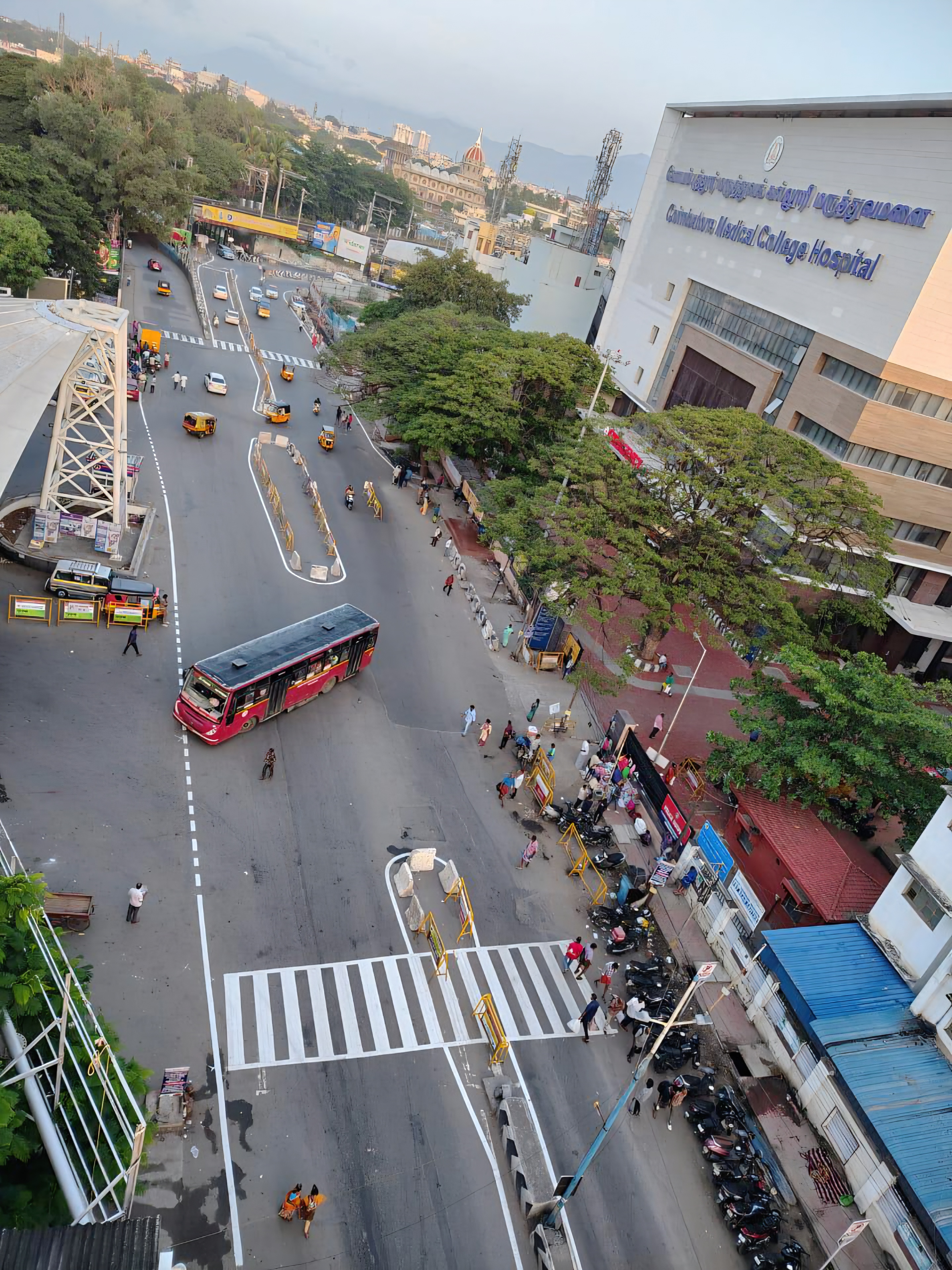
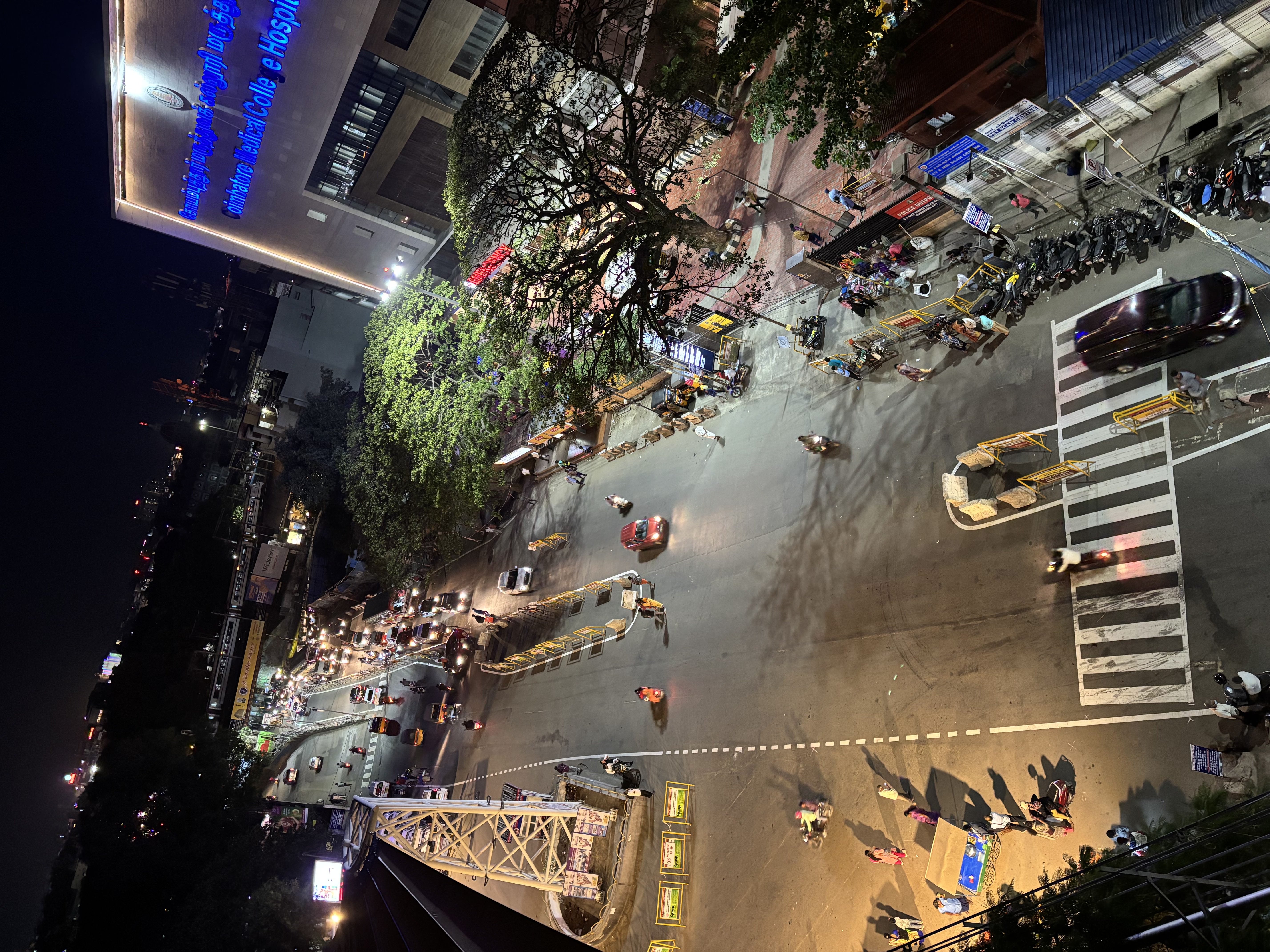
- Junction reconfiguration with defined carriageways and lane markings to streamline traffic flow.
- Dedicated pedestrian crossings supported with refuge islands for safer movement.
- Continuous footpath development and removal of encroachments to ensure walkability.
- Traffic signalization, signage, and box markings to regulate vehicle movements and reduce conflicts.
- Provision of bus bays and designated U-turns to organize public transport operations.
- Parking management strategies to free up carriageway space and reduce congestion.
- Integration of safe crossing points and improved traffic segregation for smoother circulation.
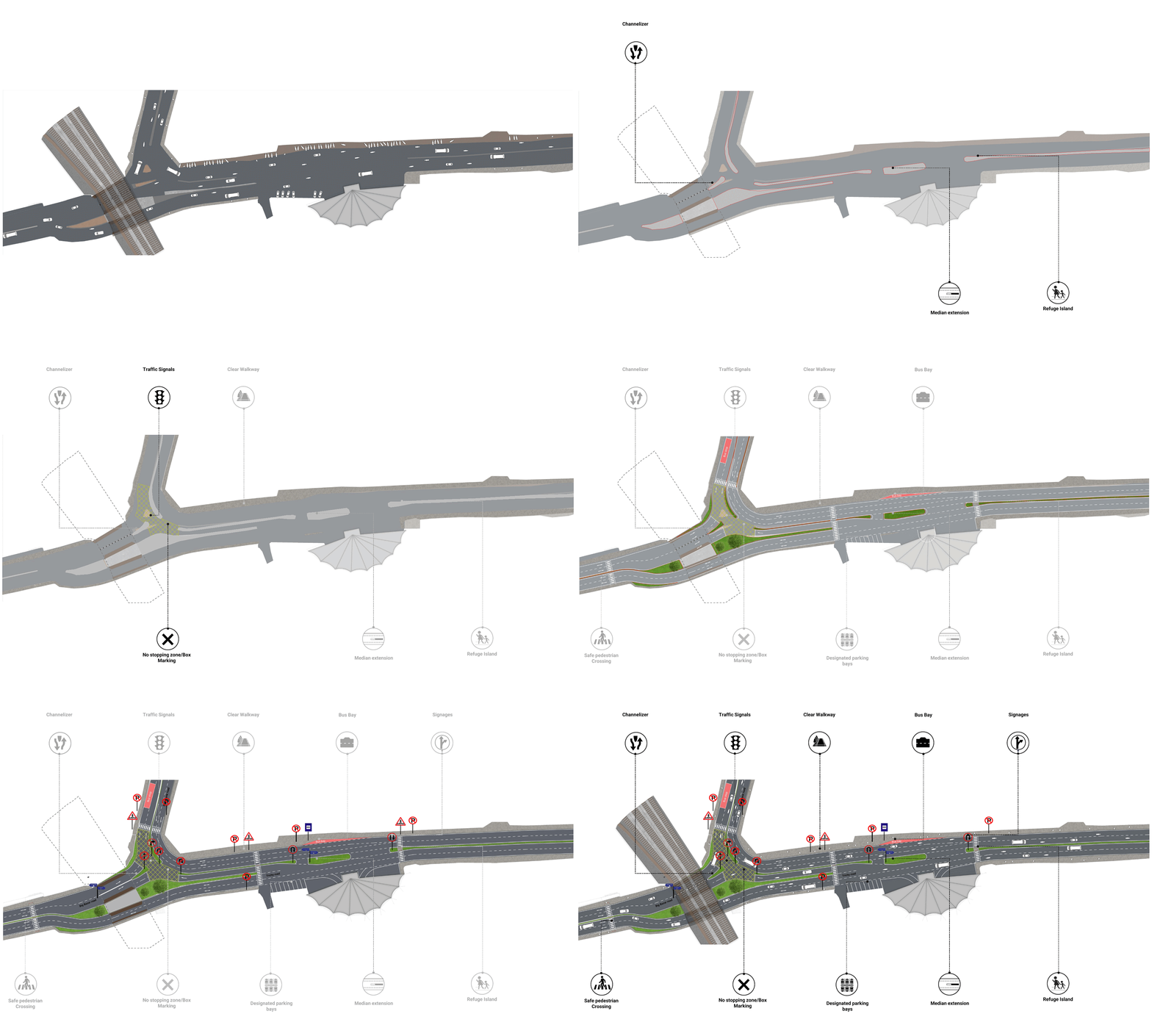
A holistic design approach focusing on junction geometry, traffic circulation, pedestrian safety, and overall urban character.
5. Design Trial - Tactical Urbanism Approach to Enhance Intersection and Corridor Safety
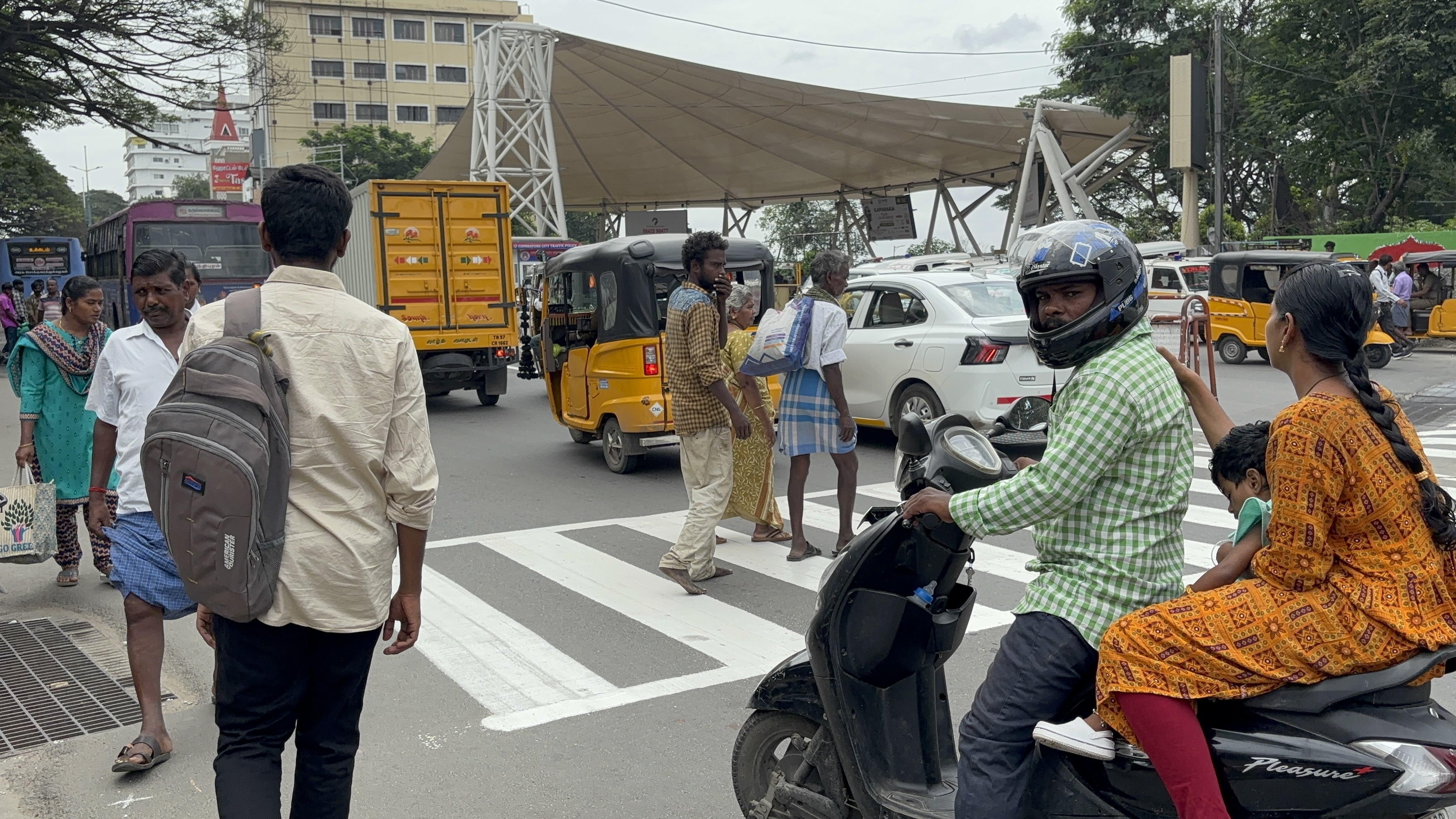
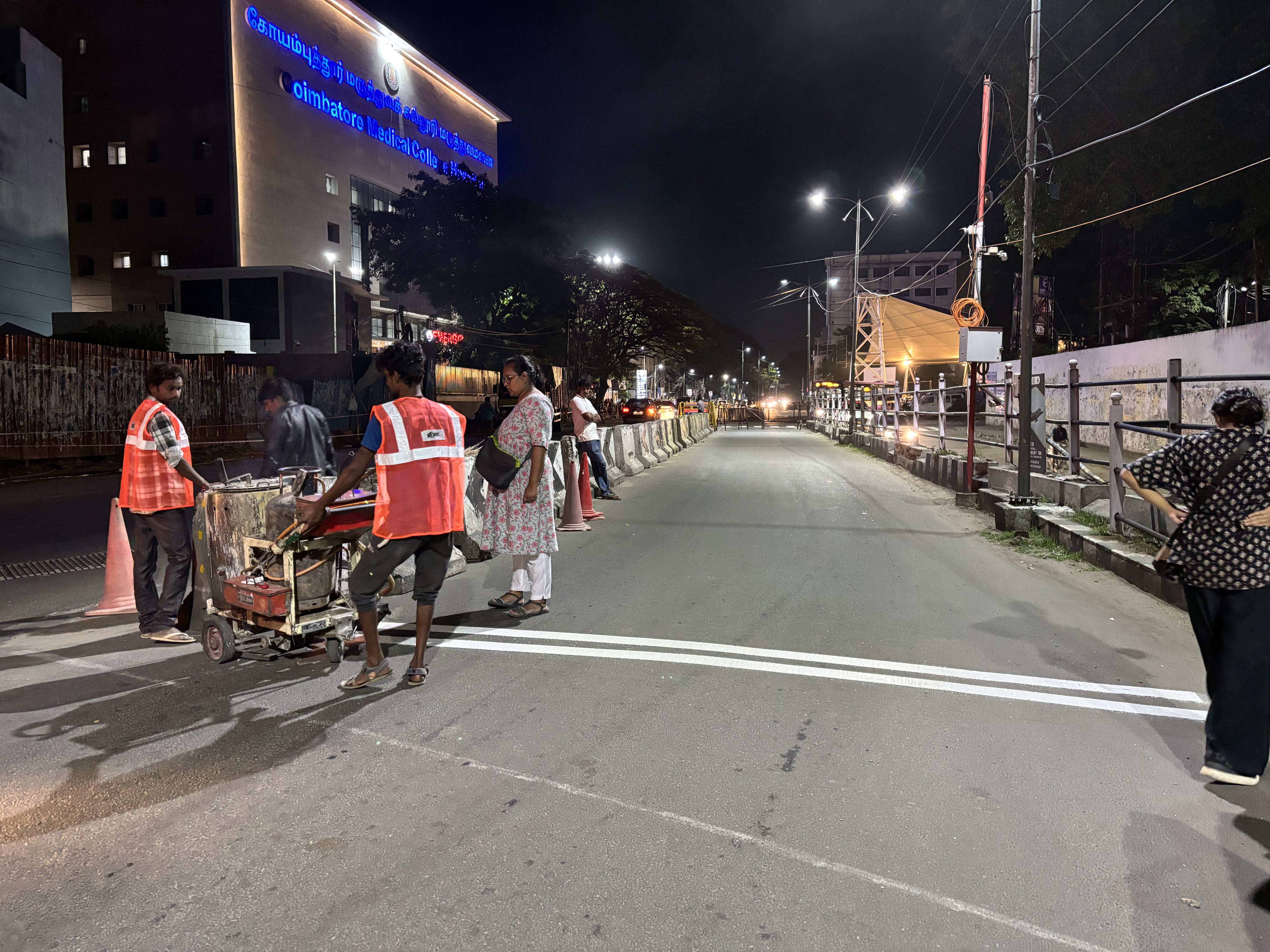
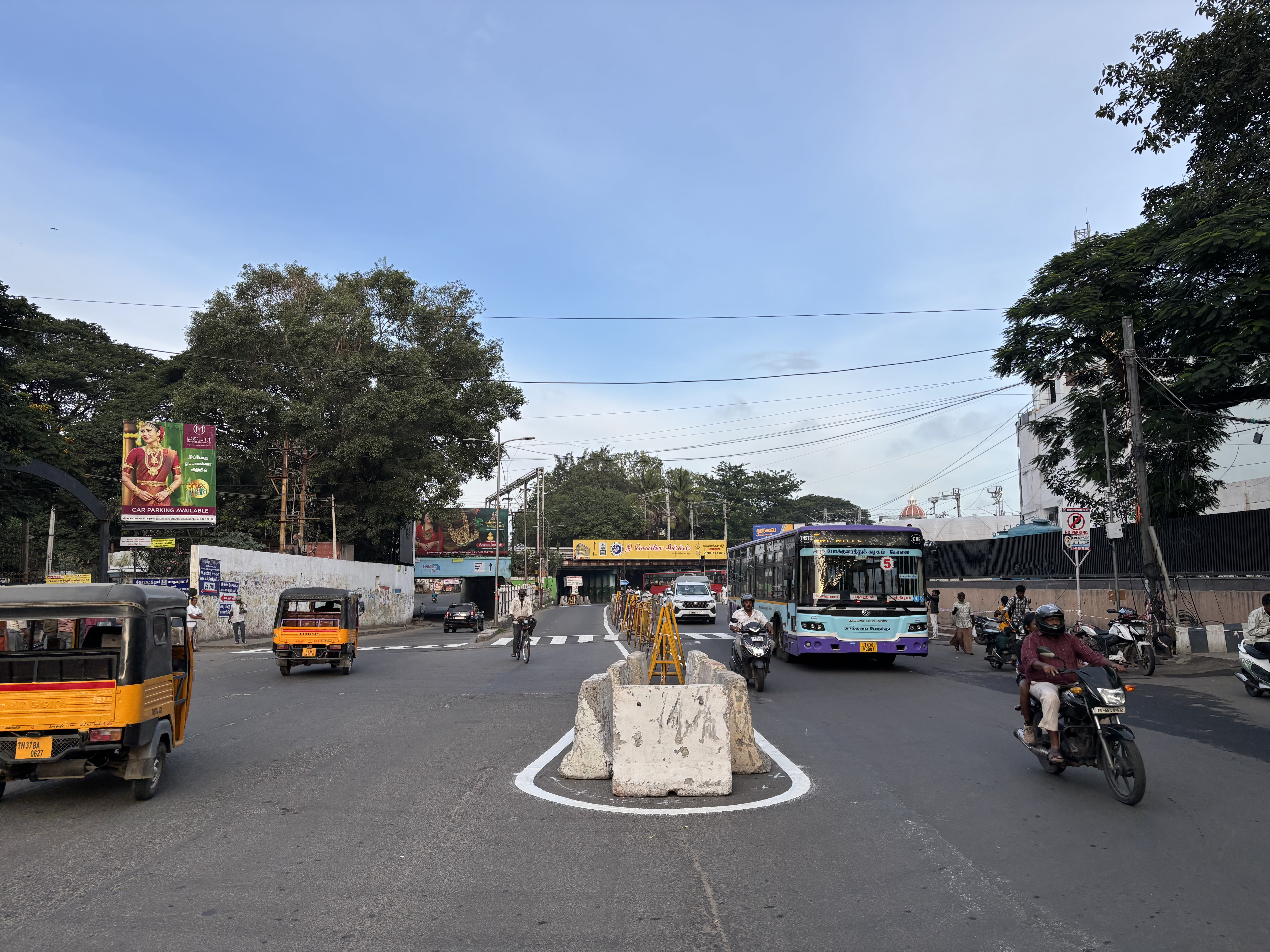
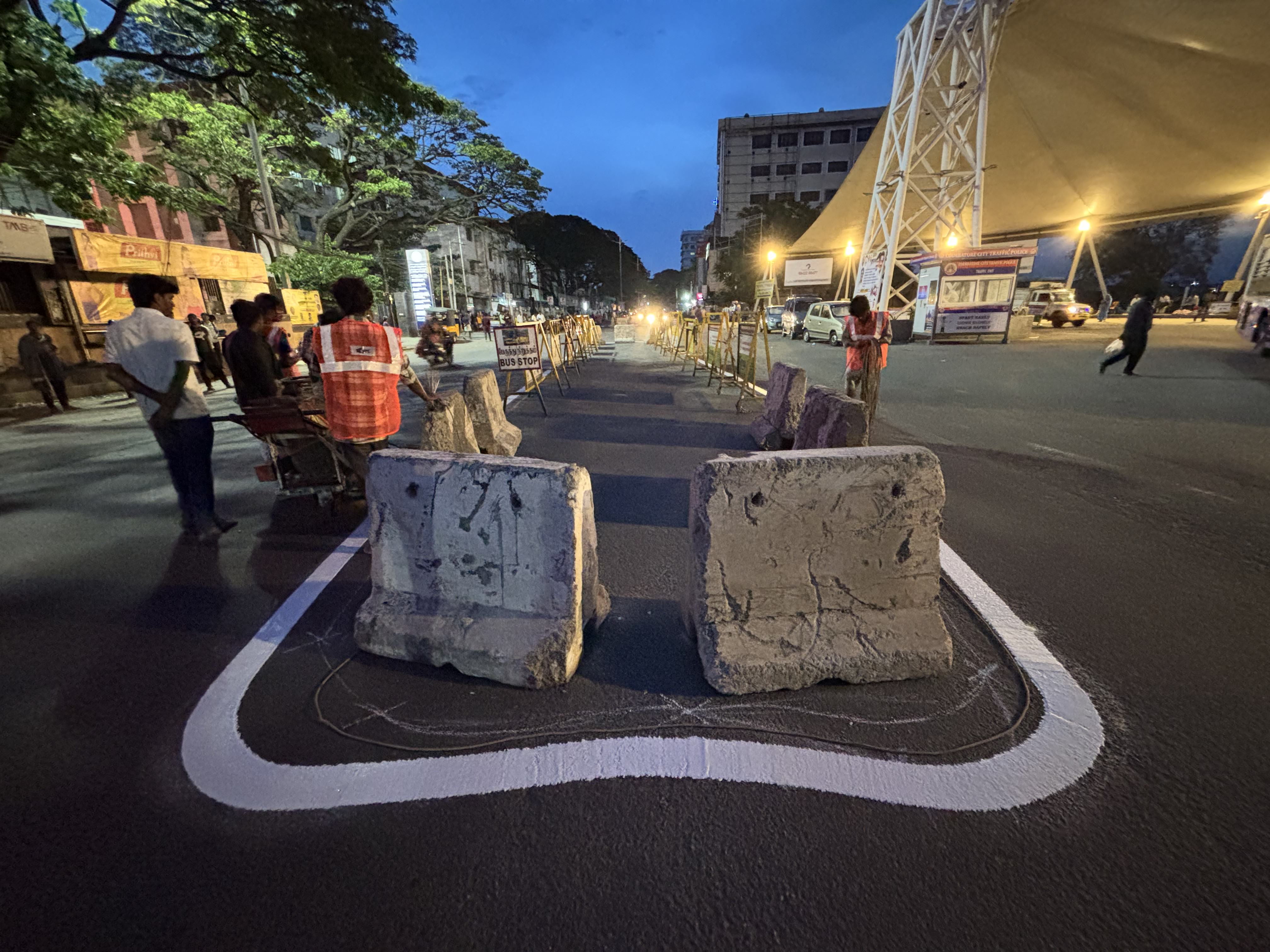
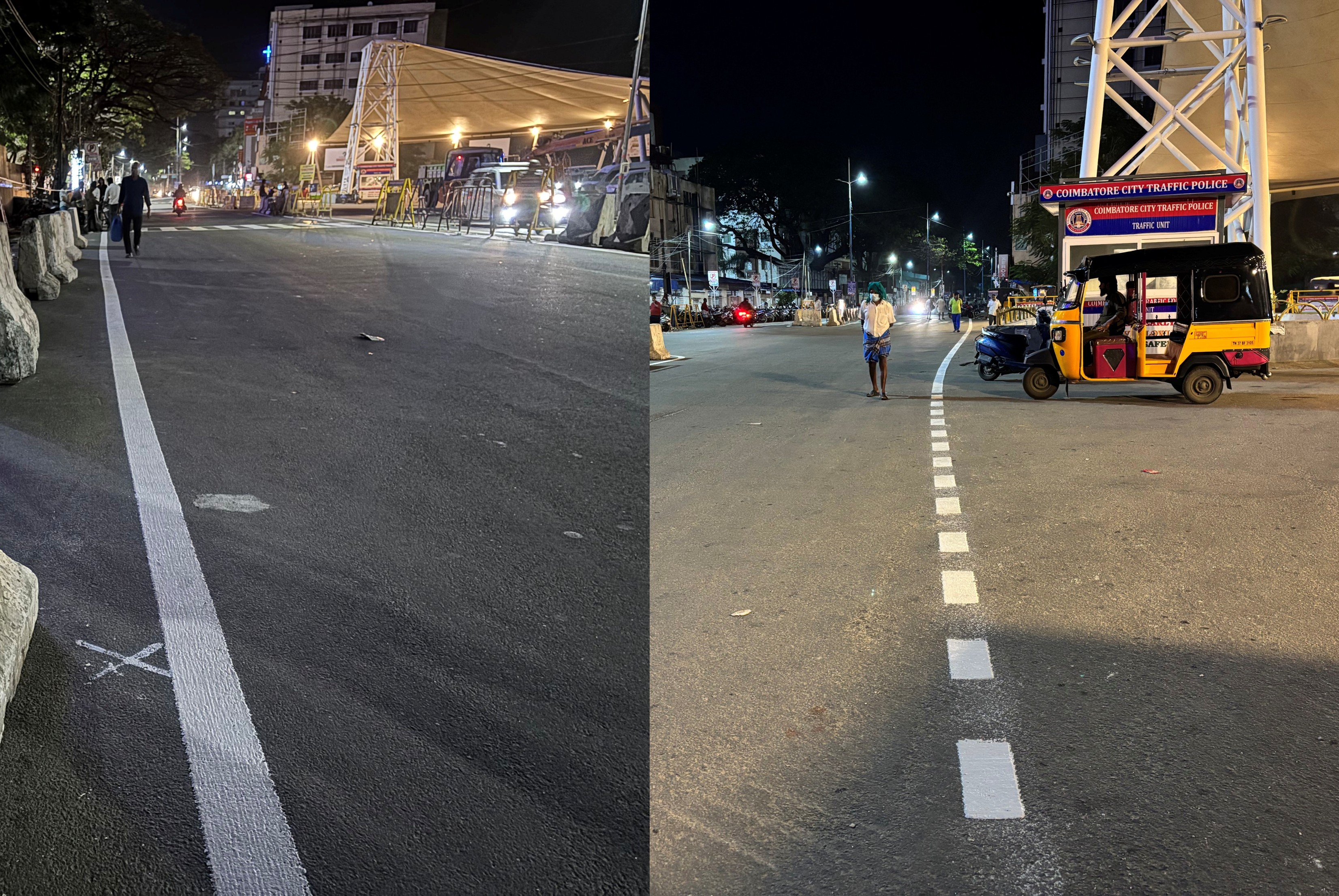
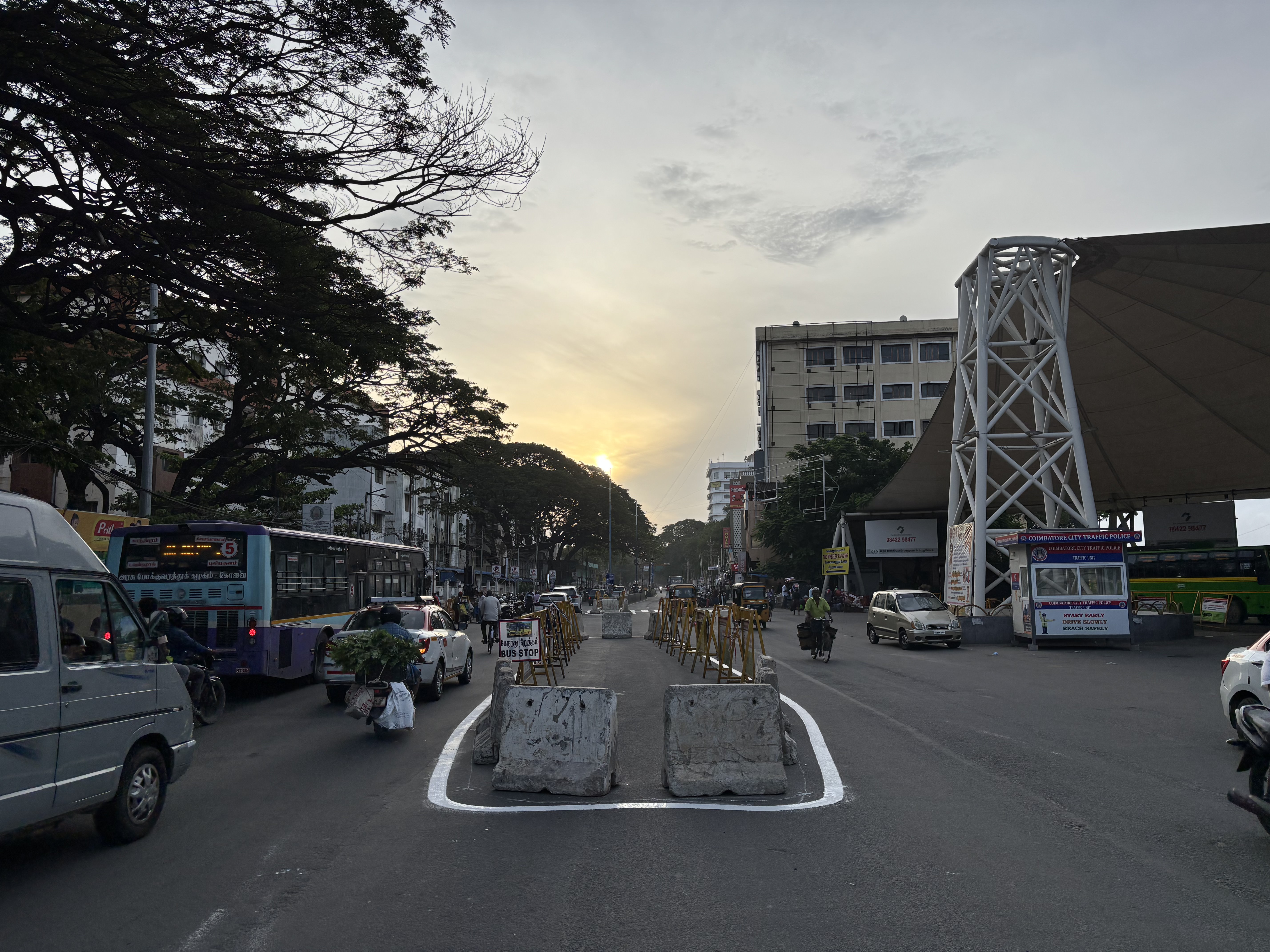
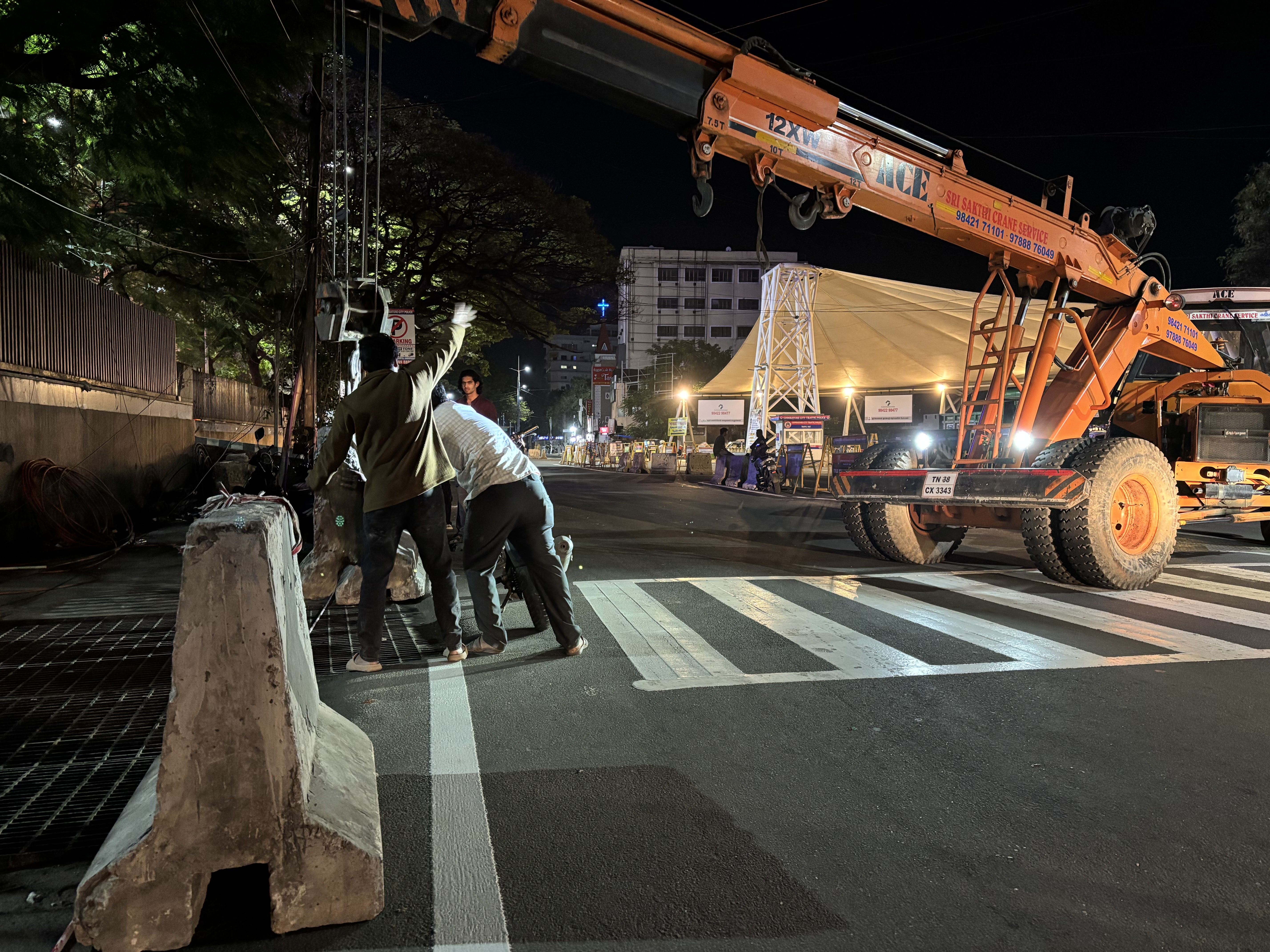
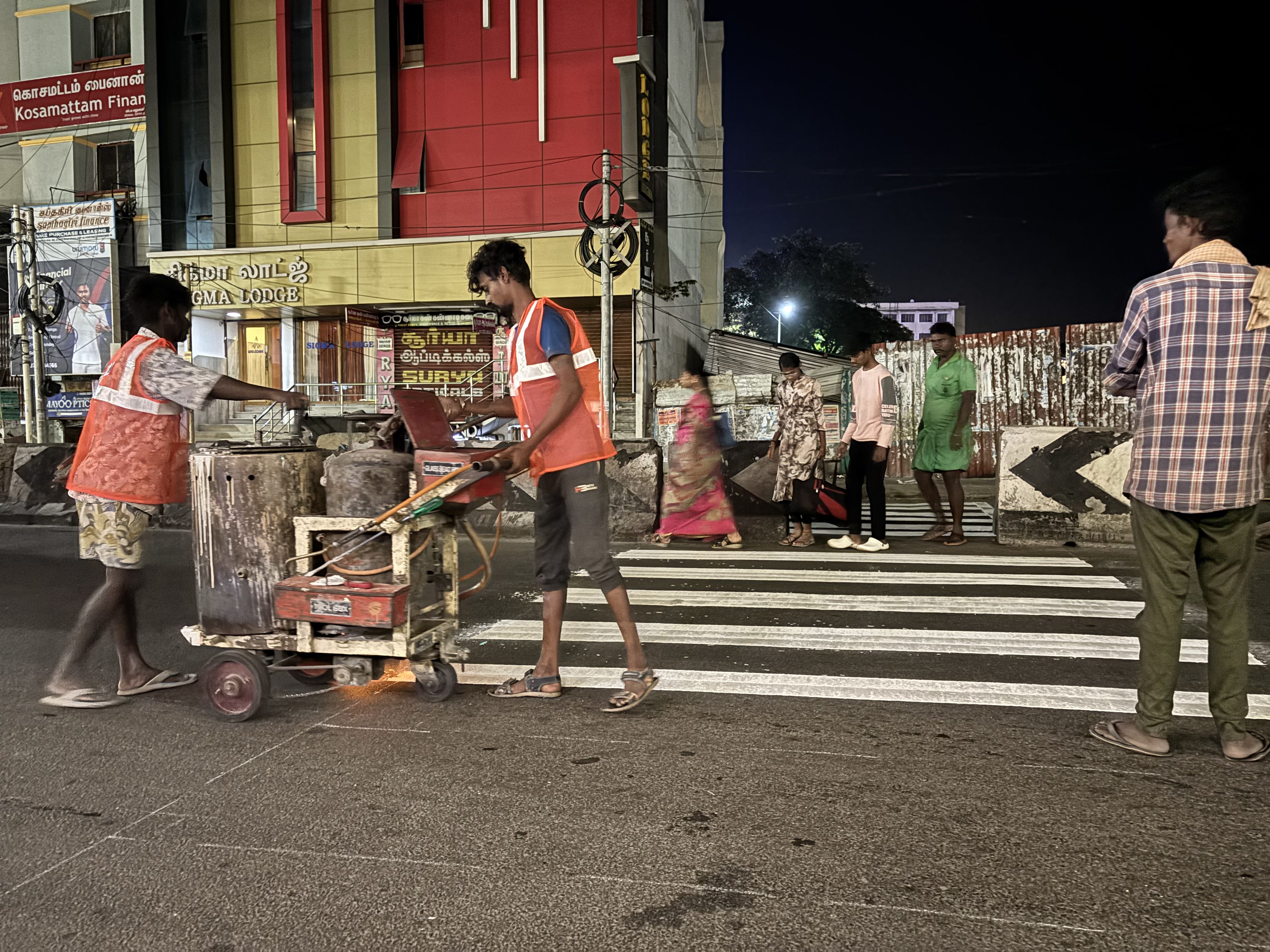
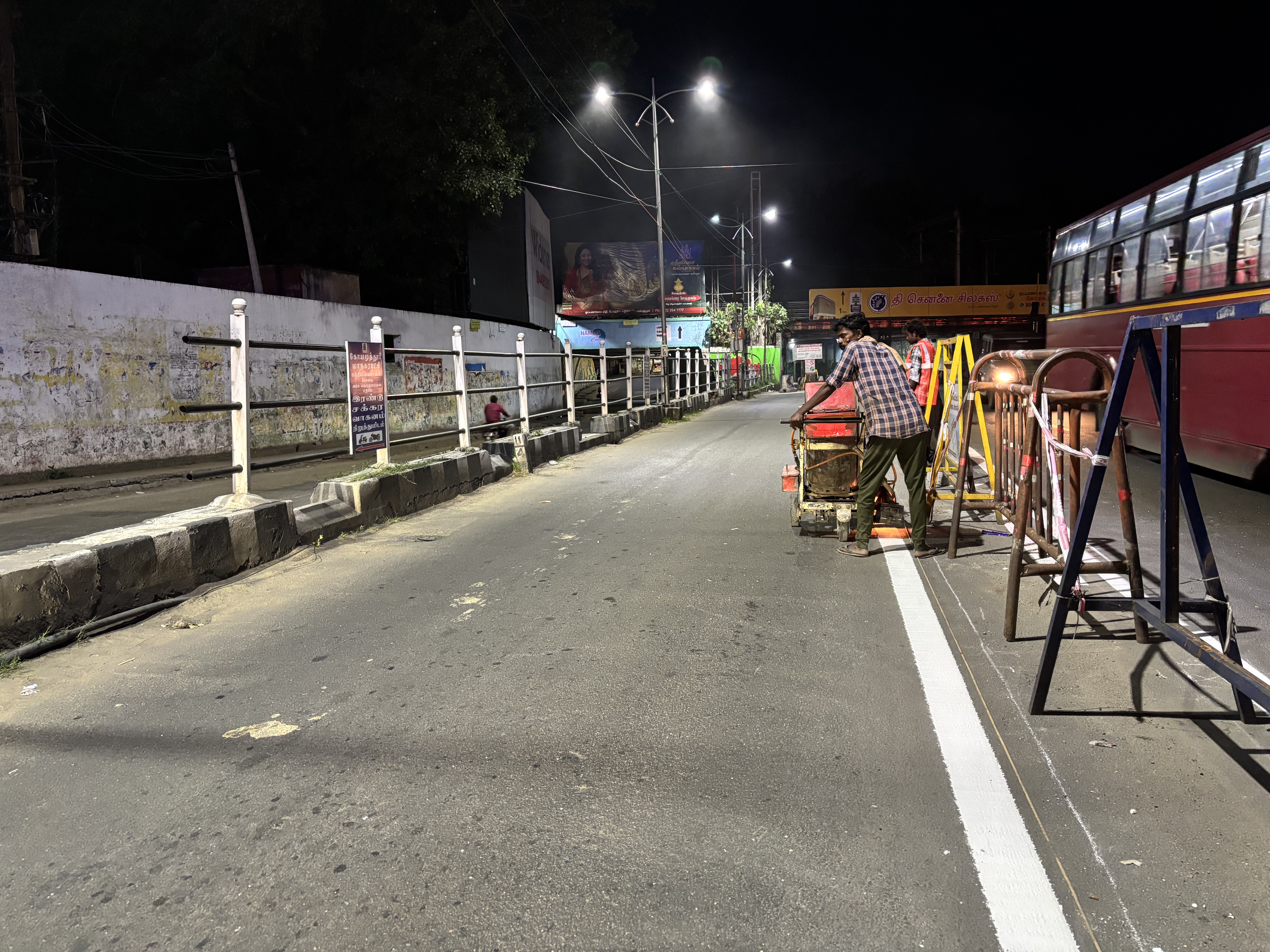
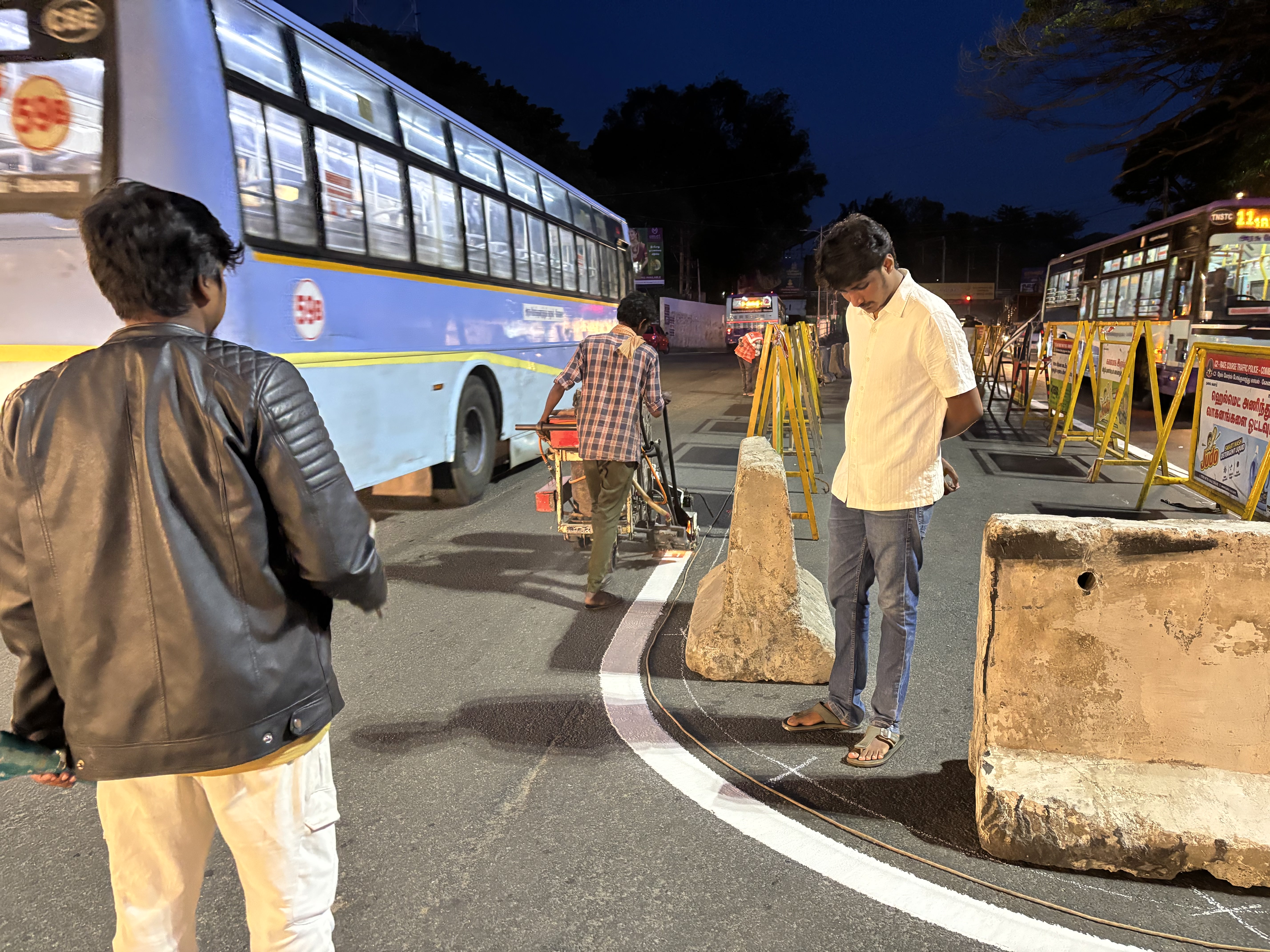
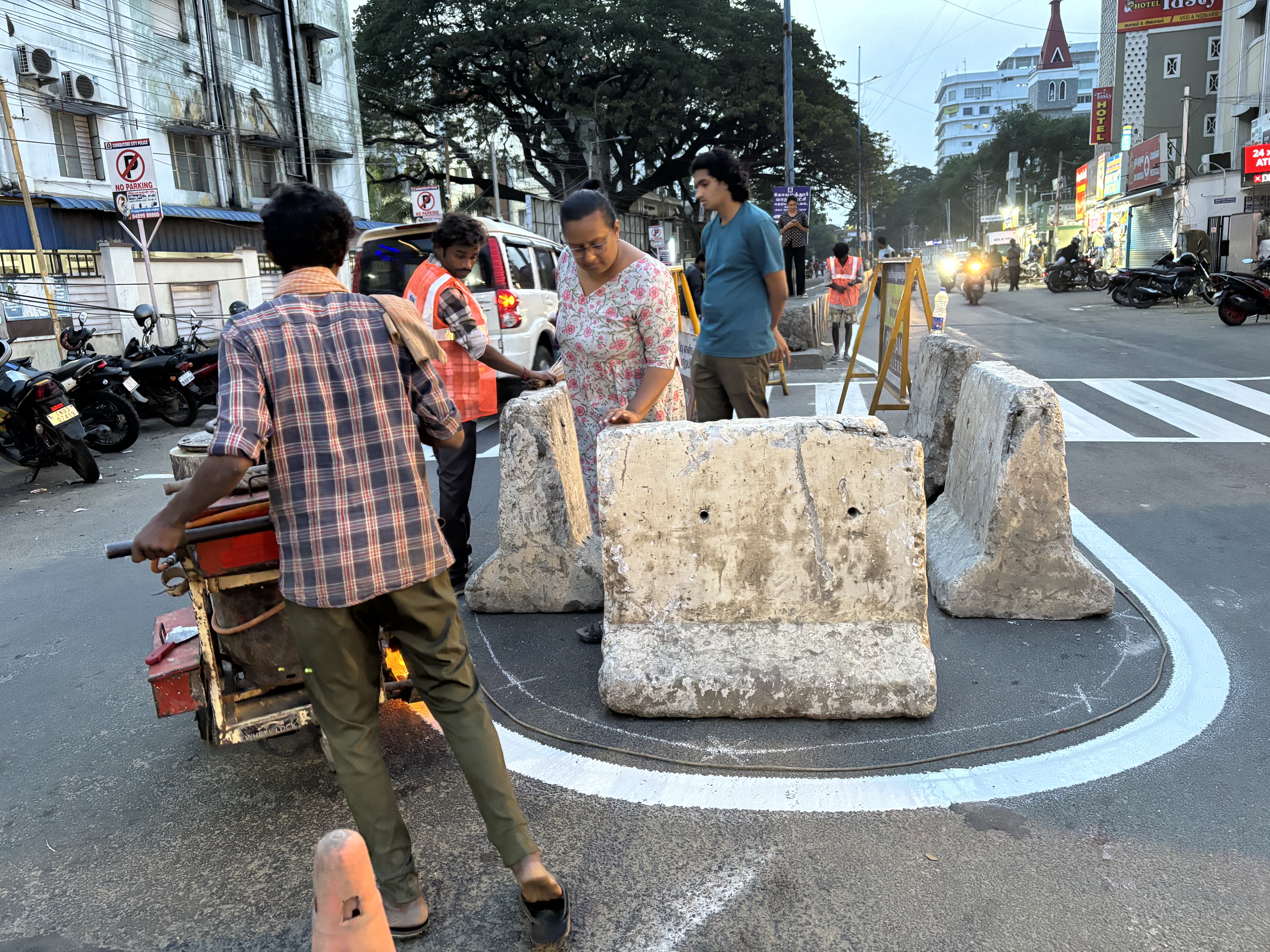
As part of the tactical urbanism trial, concrete and movable barriers were used to simulate medians and channelizers, along with temporary traffic signals, edge lane markings, sidewalk bifurcation, pedestrian crossings, and marked bus bays. These tactical measures allowed us to test the proposed design on-ground, observe improvements in safety and traffic flow, and familiarize road users with the changes to ensure smoother compliance before final construction.
Before
After
Tactical Design Interventions to Enhance Safety and Flow
Tactical Trial Steps
Tactical Trial Gallery
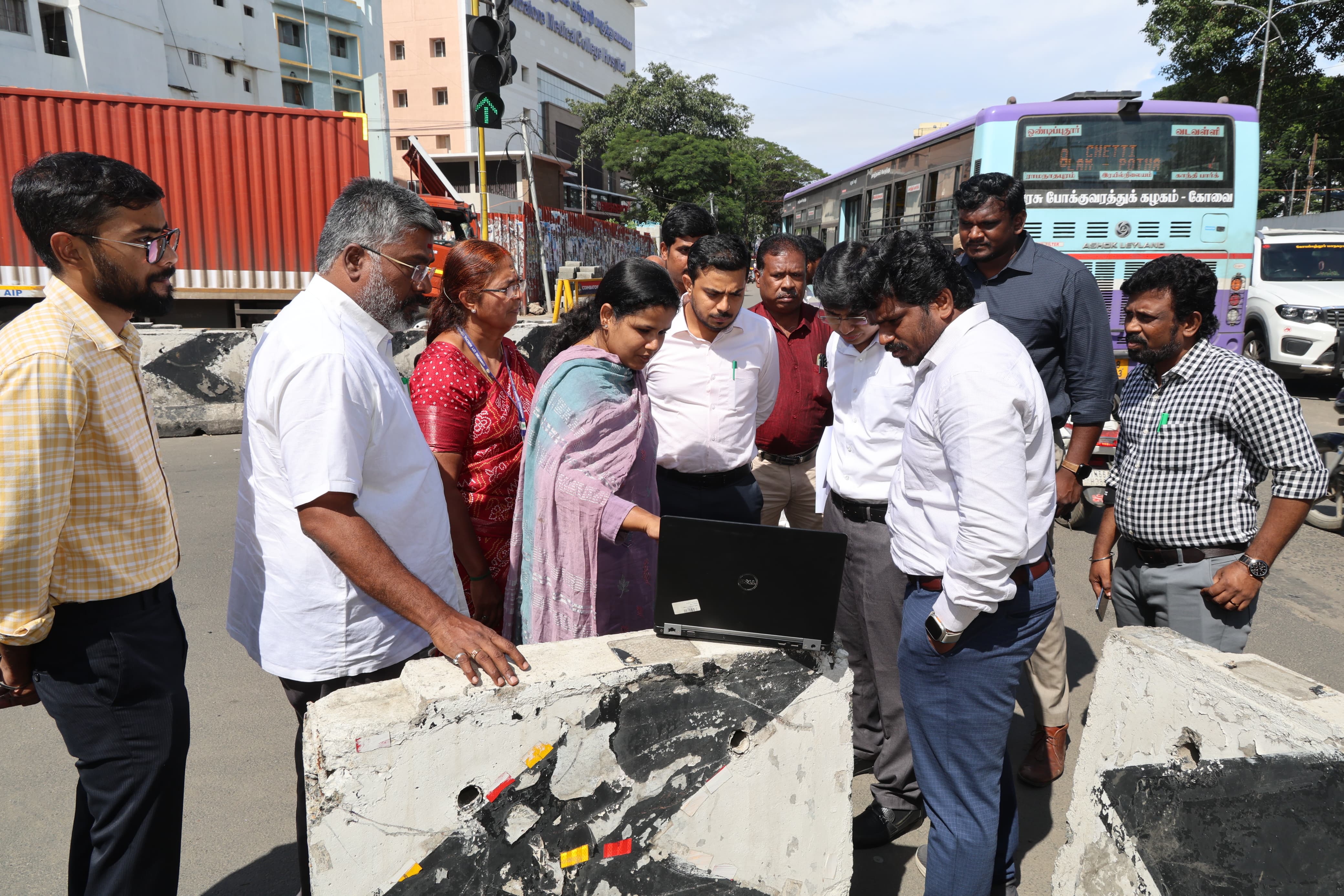
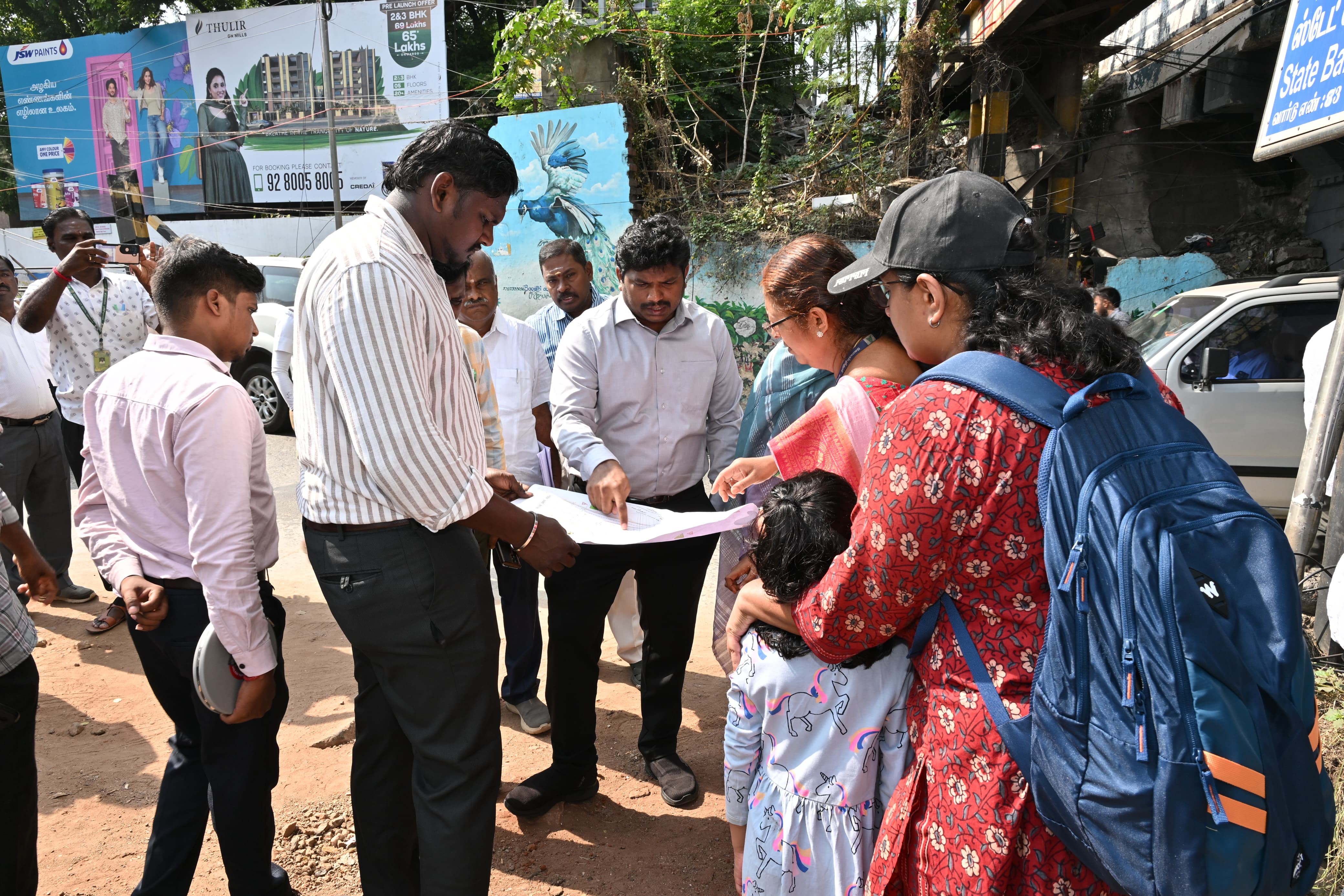
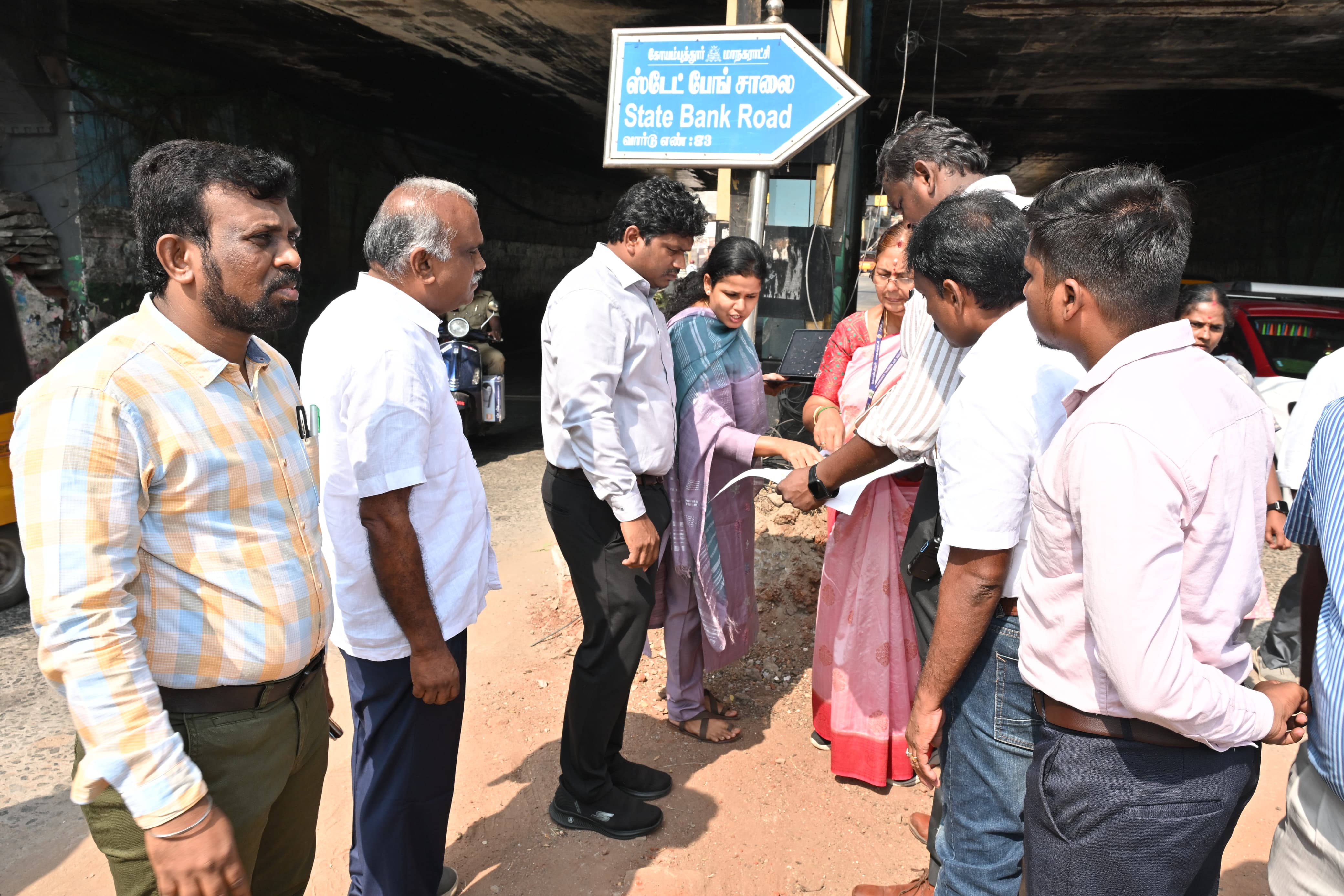
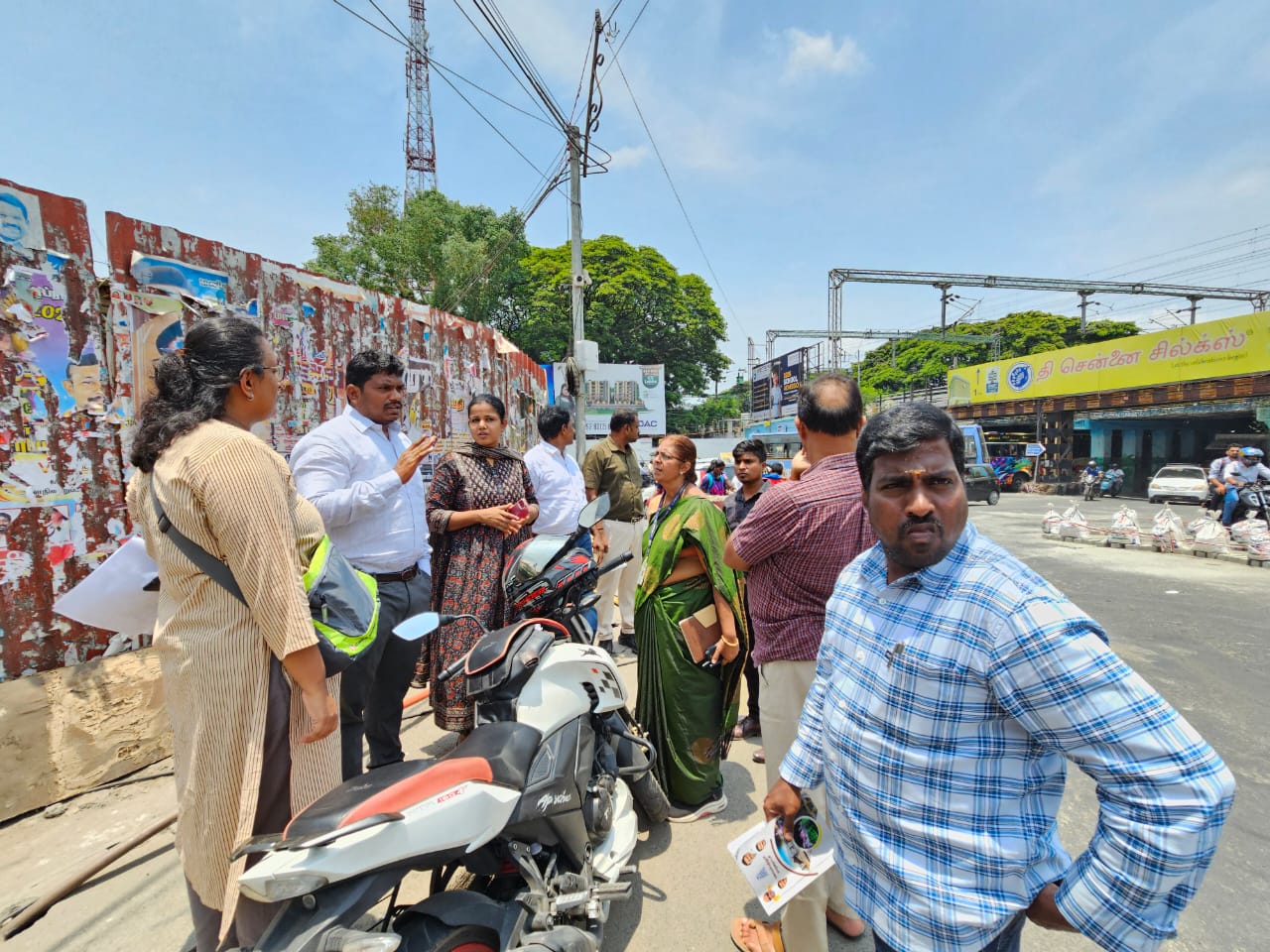
6. On-field site visits by key officials, traffic police and engineers
Key officials and engineers visited the junction to observe the tactical trial and assess its impact on traffic and pedestrian safety.