 CCMC
CCMC
Power House Junction Transformation
Enhancing safety on National Highway 181 through strategic redesign
View TransformationOverview
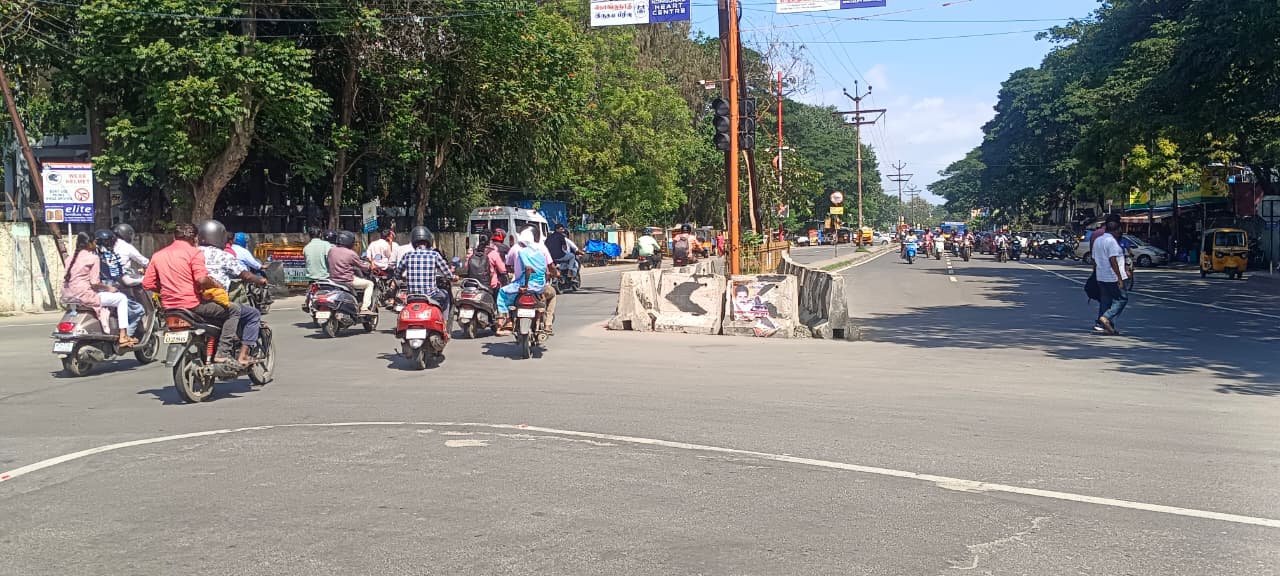
Power House Junction is located along National Highway 181, a key arterial corridor that carries consistently high traffic volumes. At this location, the highway splits into four arms within short distances, creating a cluster of closely spaced intersections that require coordinated attention. The primary node within this cluster is the main junction formed by the 90-degree intersection of Raju Naidu Street with NH 181 (Dr. Rajendra Prasad Road), making it a critical point for managing both through-traffic on the highway and local movements from the adjoining urban roads.
Despite being signalized, the junction exhibits critical pedestrian-related deficiencies. The site lacks designated pedestrian crossings and refuge islands, creating unsafe conditions, especially given the high-speed highway movements. Field observations indicate that school children frequently cross at this location, further heightening the vulnerability of pedestrians. These safety gaps underline the need to incorporate pedestrian infrastructure as an essential component of the junction improvement strategy.
1. Site Context
Power House Junction deals with high-speed, high-volume traffic converging with local movements from Raju Naidu Street at a signalized 90-degree intersection. The site lacks pedestrian crossings and refuge islands, exposing school children and other pedestrians to significant risk and necessitating careful design intervention.
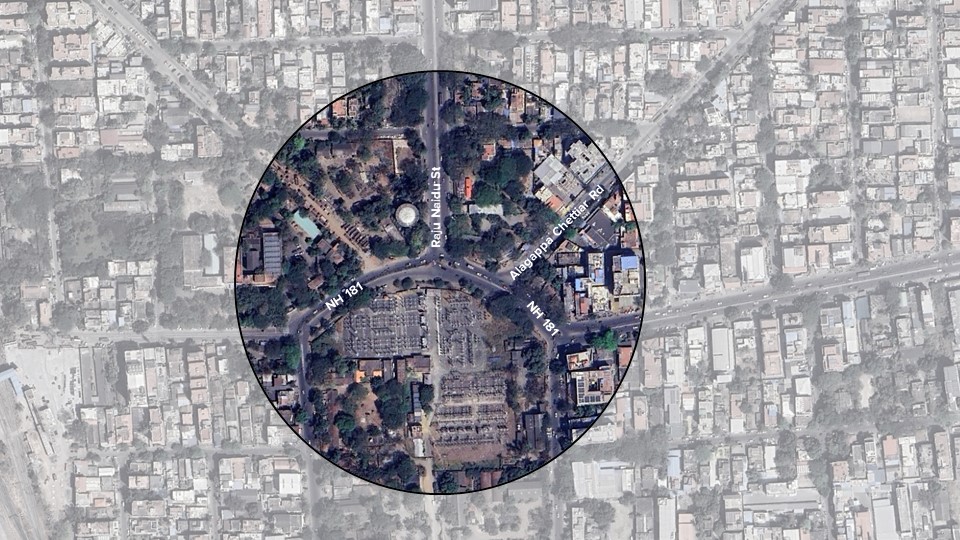
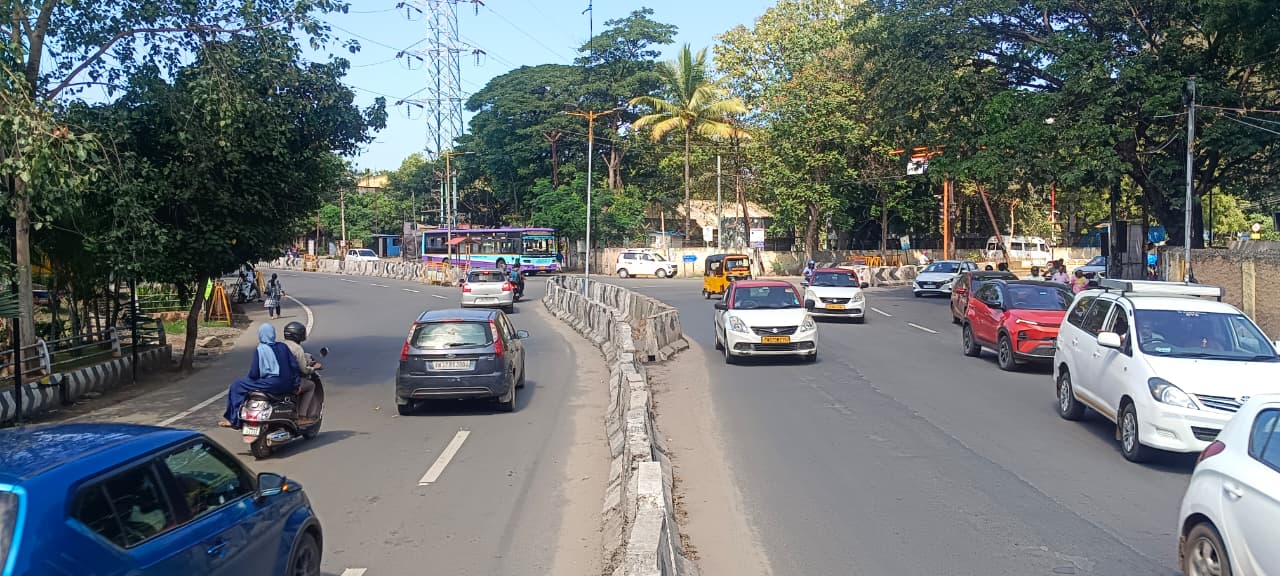
Power House Junction along National Highway 181, a critical junction connecting highway traffic with local movements.
2. Issues on Site
Through site analysis, certain critical points were identified for the design:
- The current roundabout geometry, shaped by the approach road angle, hinders smooth traffic flow and fails to guide vehicular movements effectively.
- The absence of marked stop lines creates ambiguous waiting positions for vehicles and reduces operational clarity at the junction.
- The junction lacks essential pedestrian infrastructure, including formal crossings and refuge areas, compromising safety for all pedestrians.
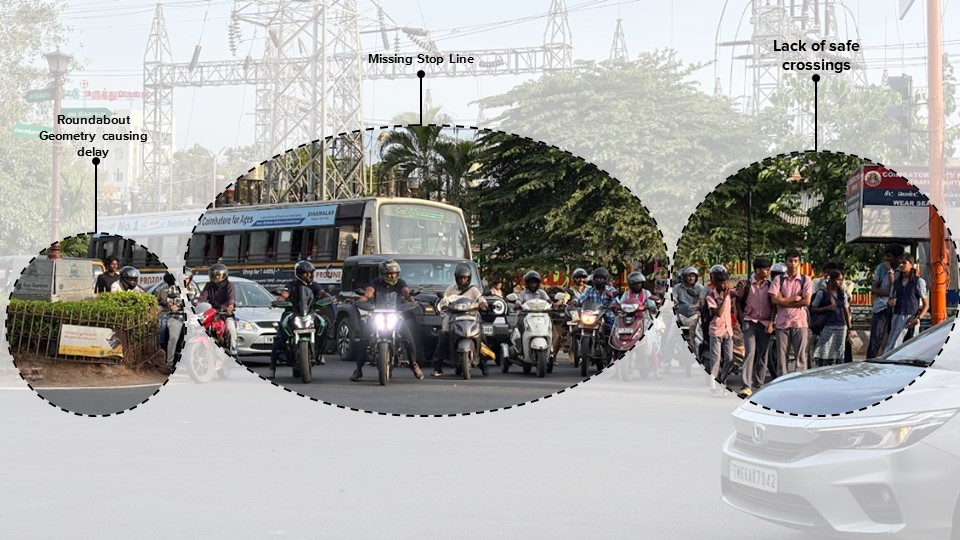
Roundabout Geometry Issues
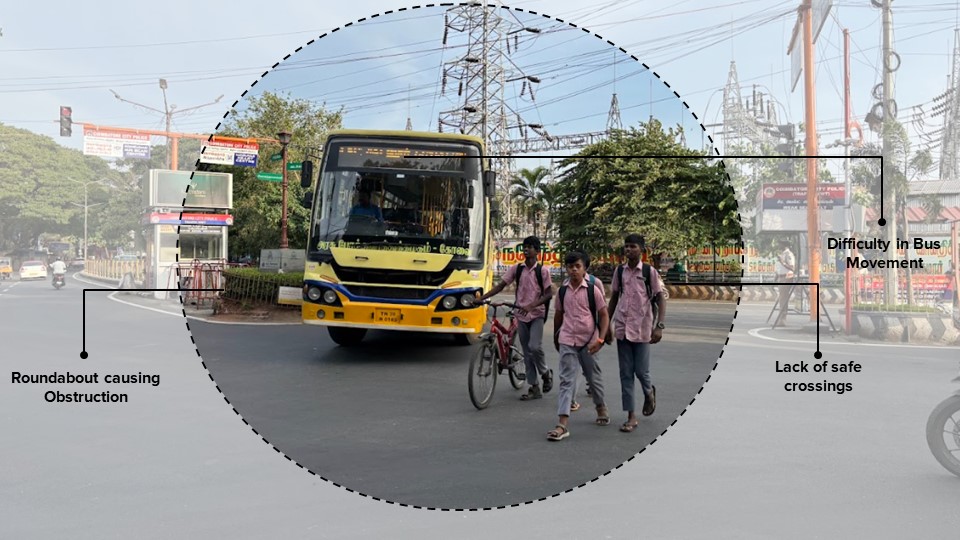
Missing Pedestrian Infrastructure
A. Lane Capacity
The junction currently provides two approach lanes from the West and three from the East; however, the traffic demand is reversed, with higher volumes requiring three lanes on the Western approach and lower volumes requiring only two on the Eastern side. Consequently, a full median realignment was necessary to redistribute carriageway width appropriately and match lane provisions with actual traffic flow patterns.
Existing Issues
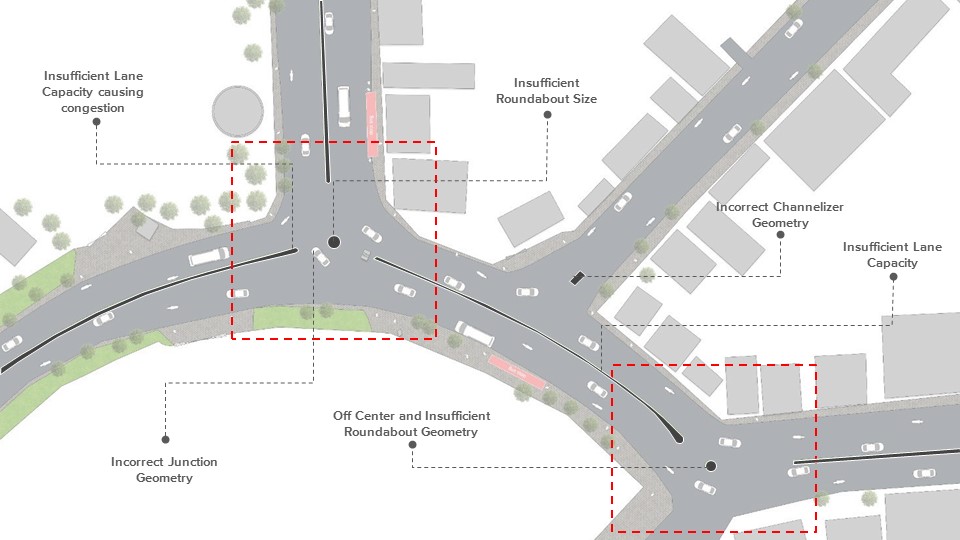
Proposed Realignment
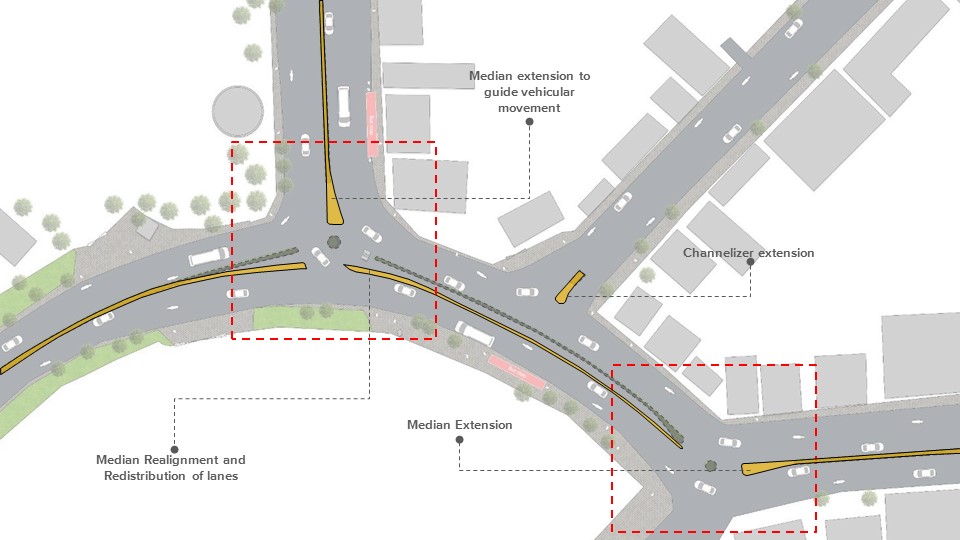
Lane Capacity Analysis and Proposed Realignment
B. Junction Focus
To improve operational efficiency, the junction area required compaction creating clearer, more defined movement paths. This compaction was paired with a prioritization of pedestrian safety elements to ensure safer and more accessible crossings.
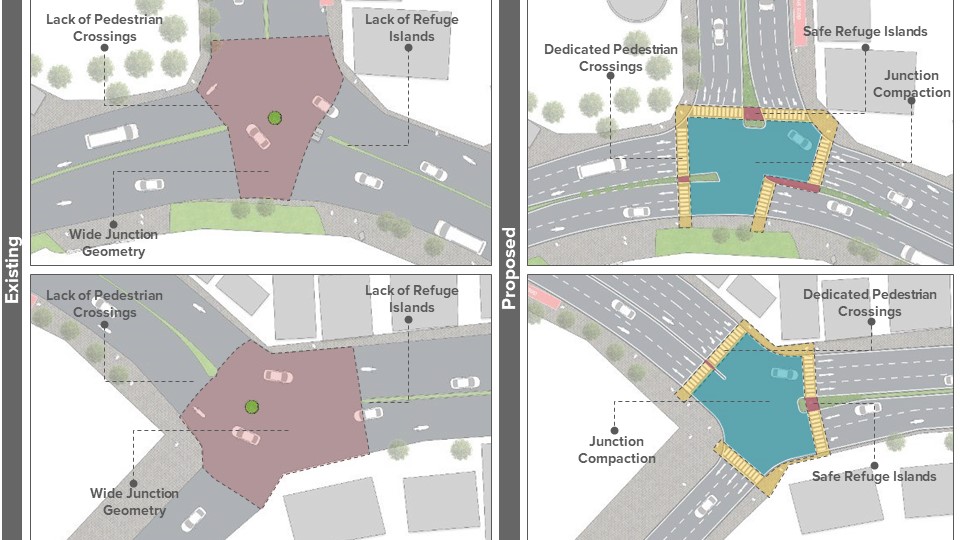
Junction compaction strategy with pedestrian safety prioritization
3. Final Design
The final design incorporates optimized lane configuration, proper median alignment, and comprehensive pedestrian safety features to address all identified issues.
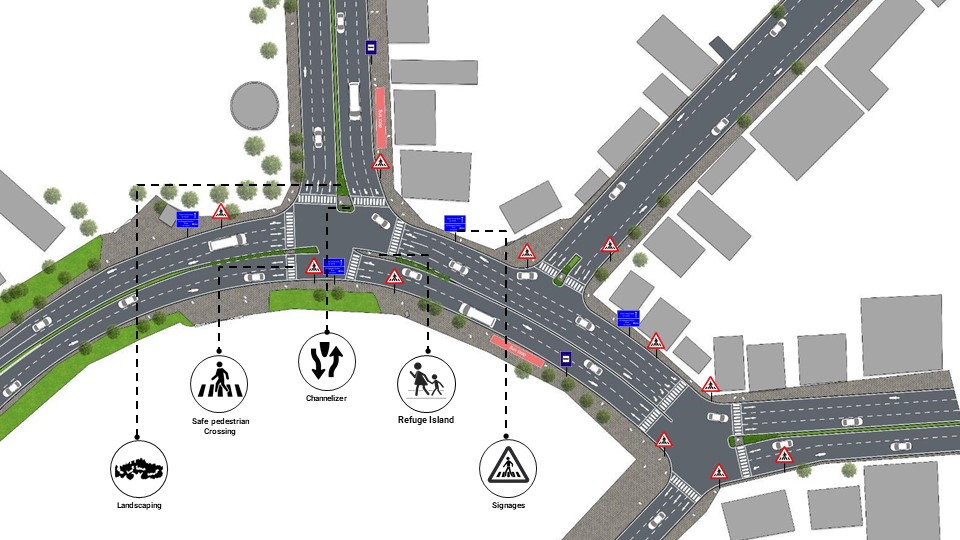
Final Proposed Design for Power House Junction
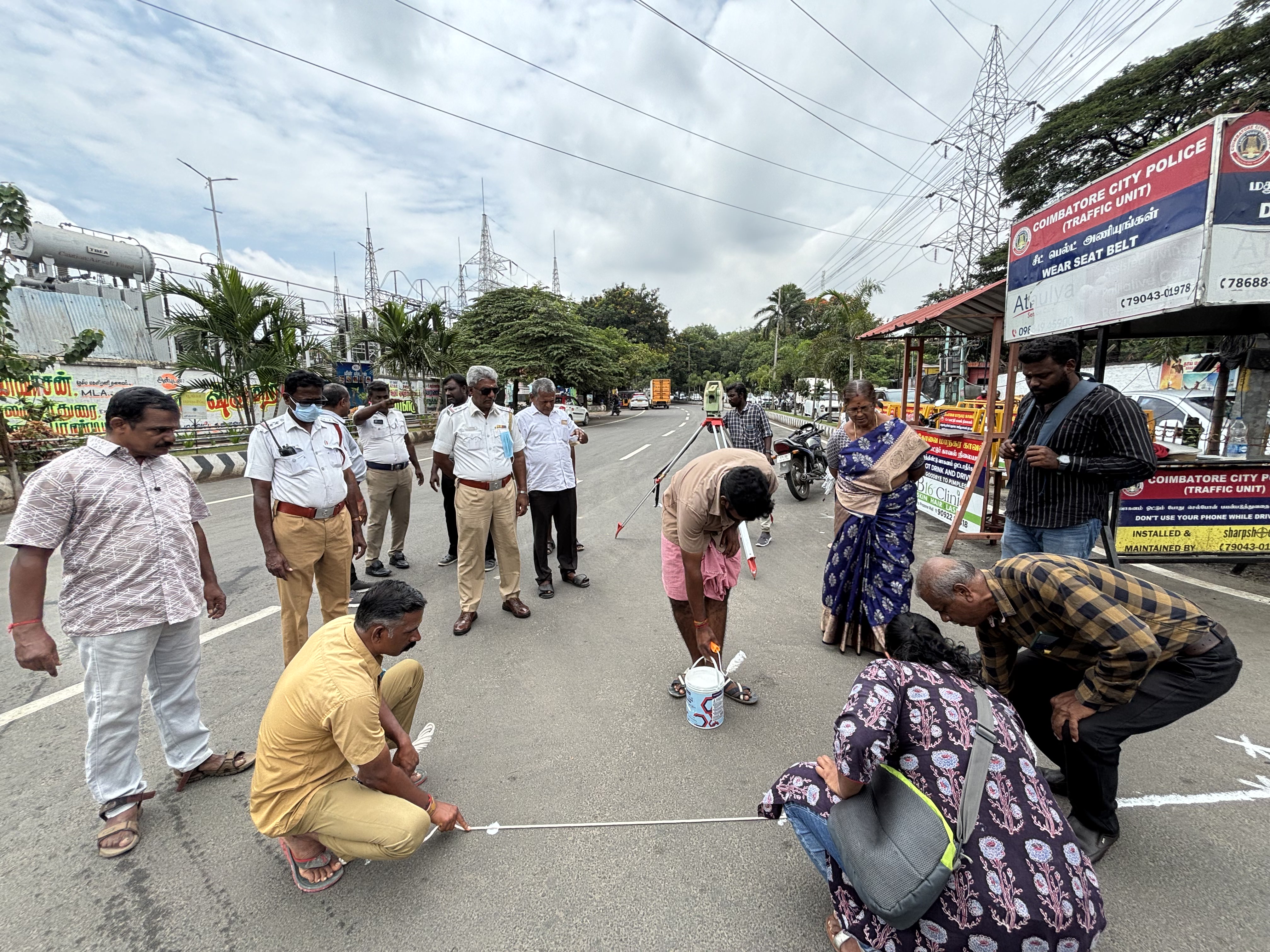
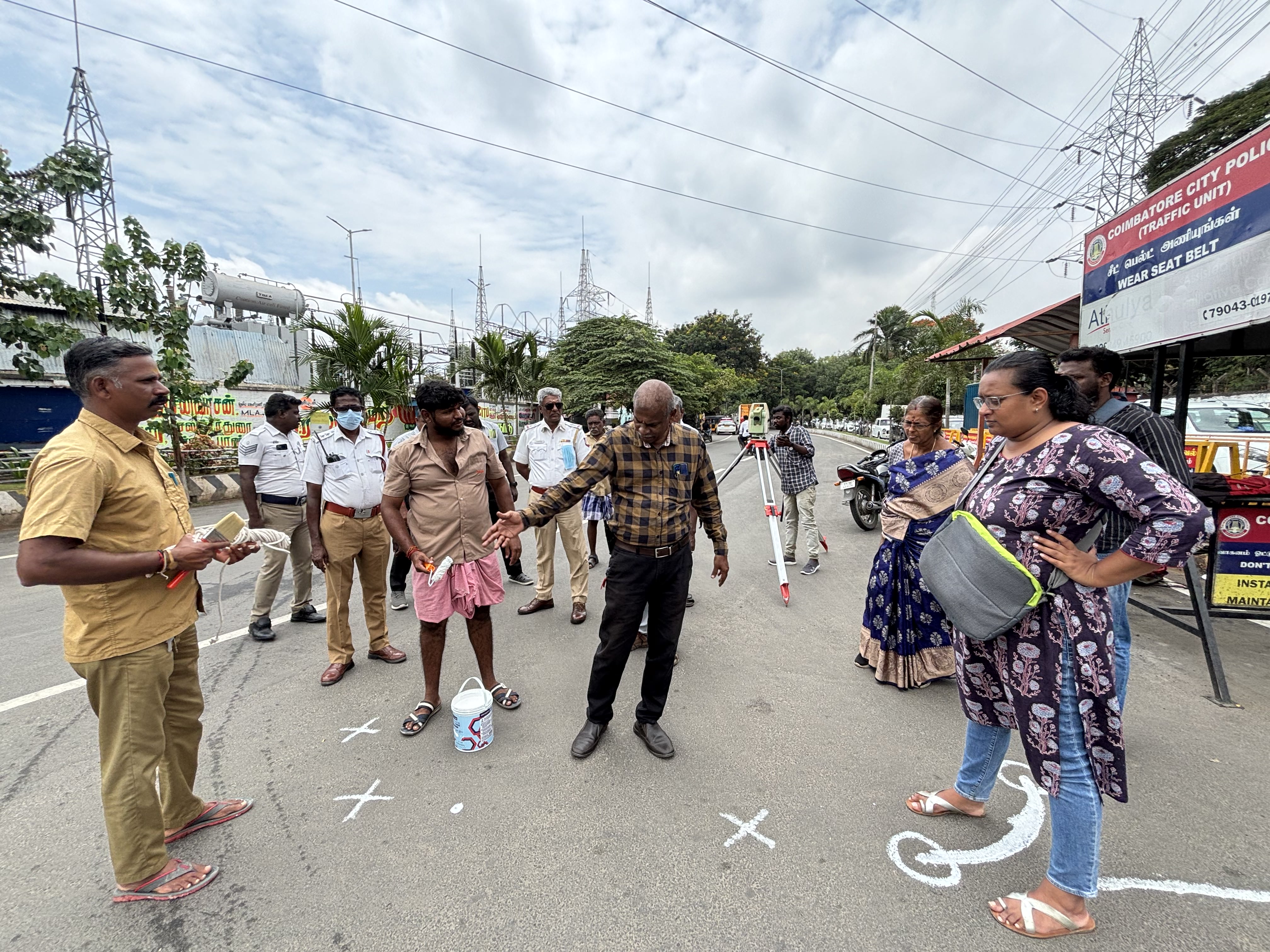
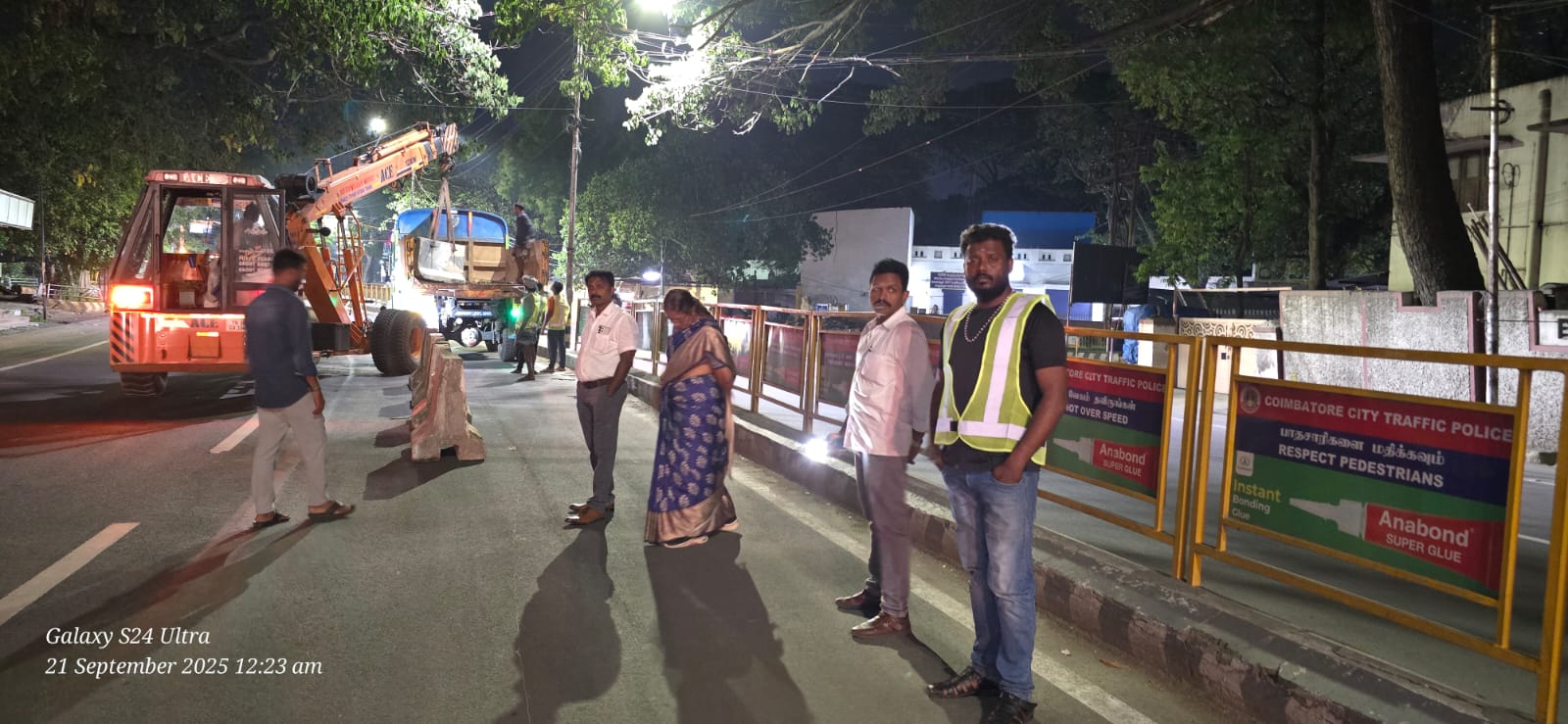
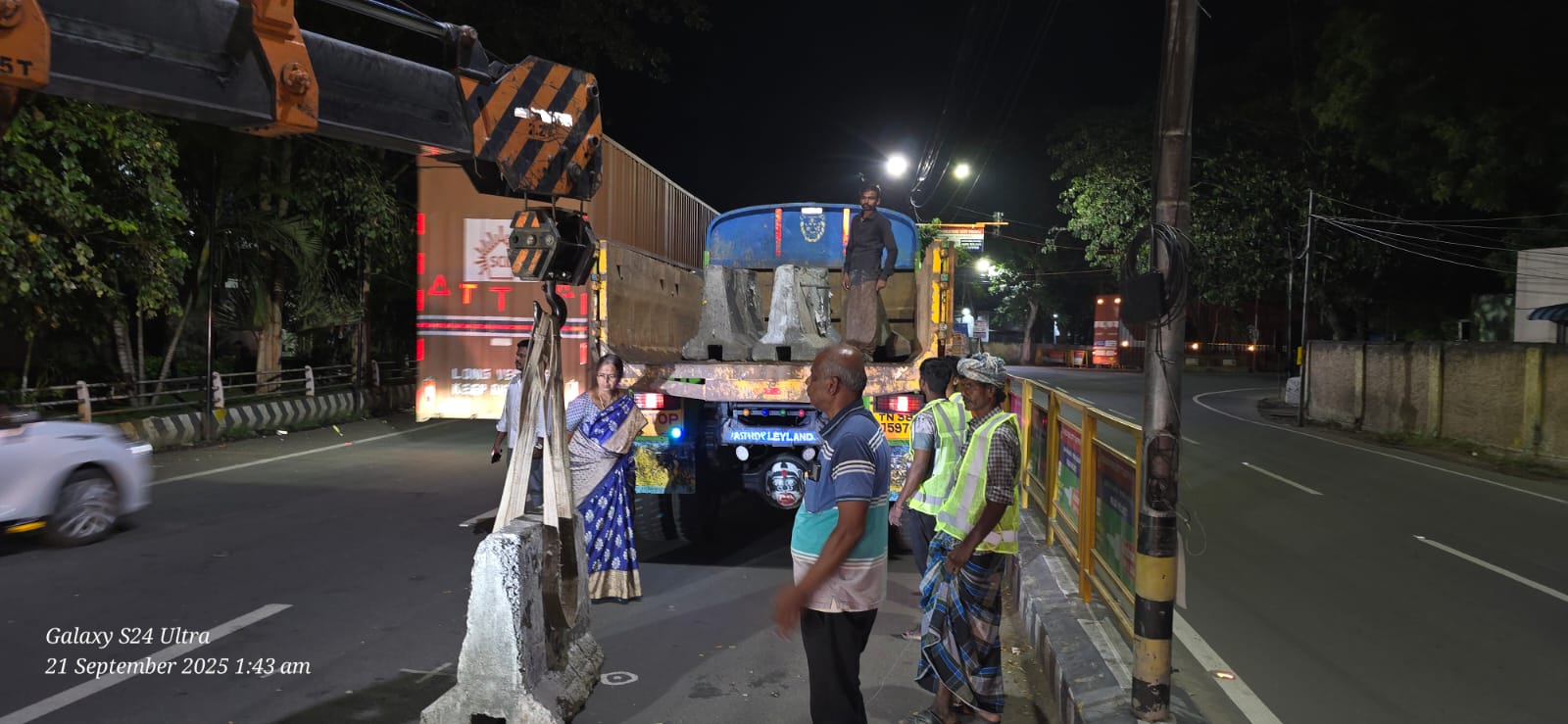
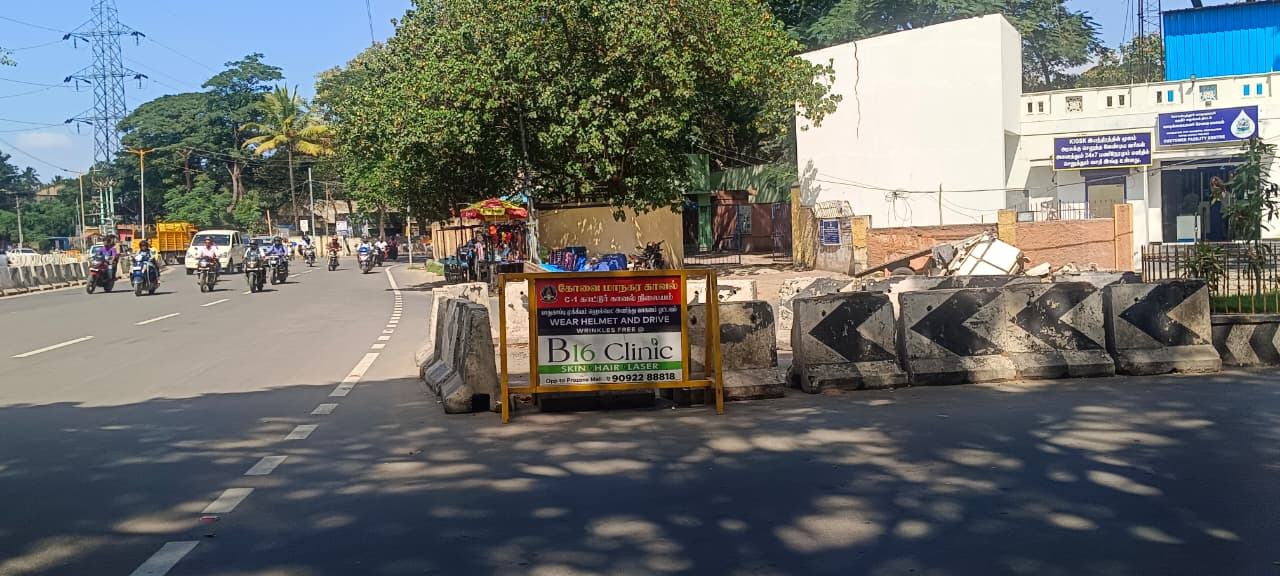
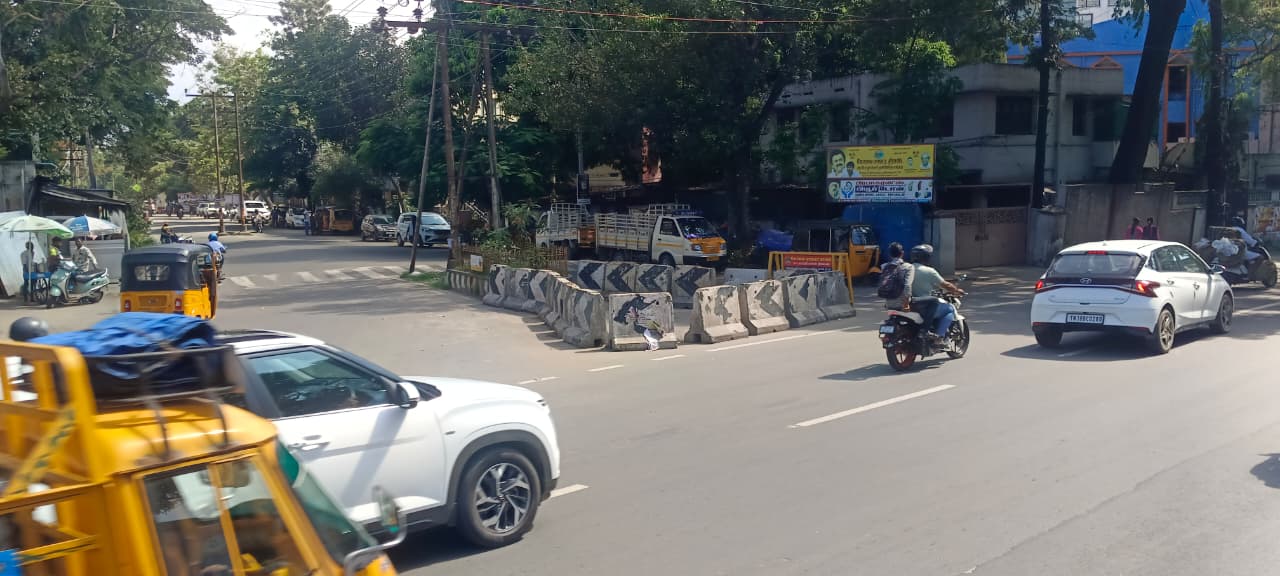
4. Tactical Urbanism - Design Trials and Marking
As part of the tactical urbanism approach, temporary interventions were implemented to test the design concepts on-site and gather real-time feedback from road users.